
Straight Knife Grinder: Record Remaining Knife Height by Cycle
Track remaining knife height with a straight knife grinder workflow, protect cutterhead clamping limits, and plan matched-set replacement for factory teams.

Recording Remaining Knife Height With a Straight Knife Grinder
Quick Answer: Record each knife’s usable height before and after every grind, together with material removed and set identity. Compare the post-grind height with the cutterhead or wedge manufacturer’s minimum clamping dimension before release. Sharpening-cycle count is not a safe discard rule. A repeatable straight knife grinder setup supports reliable records but cannot replace the cutterhead-specific limit.
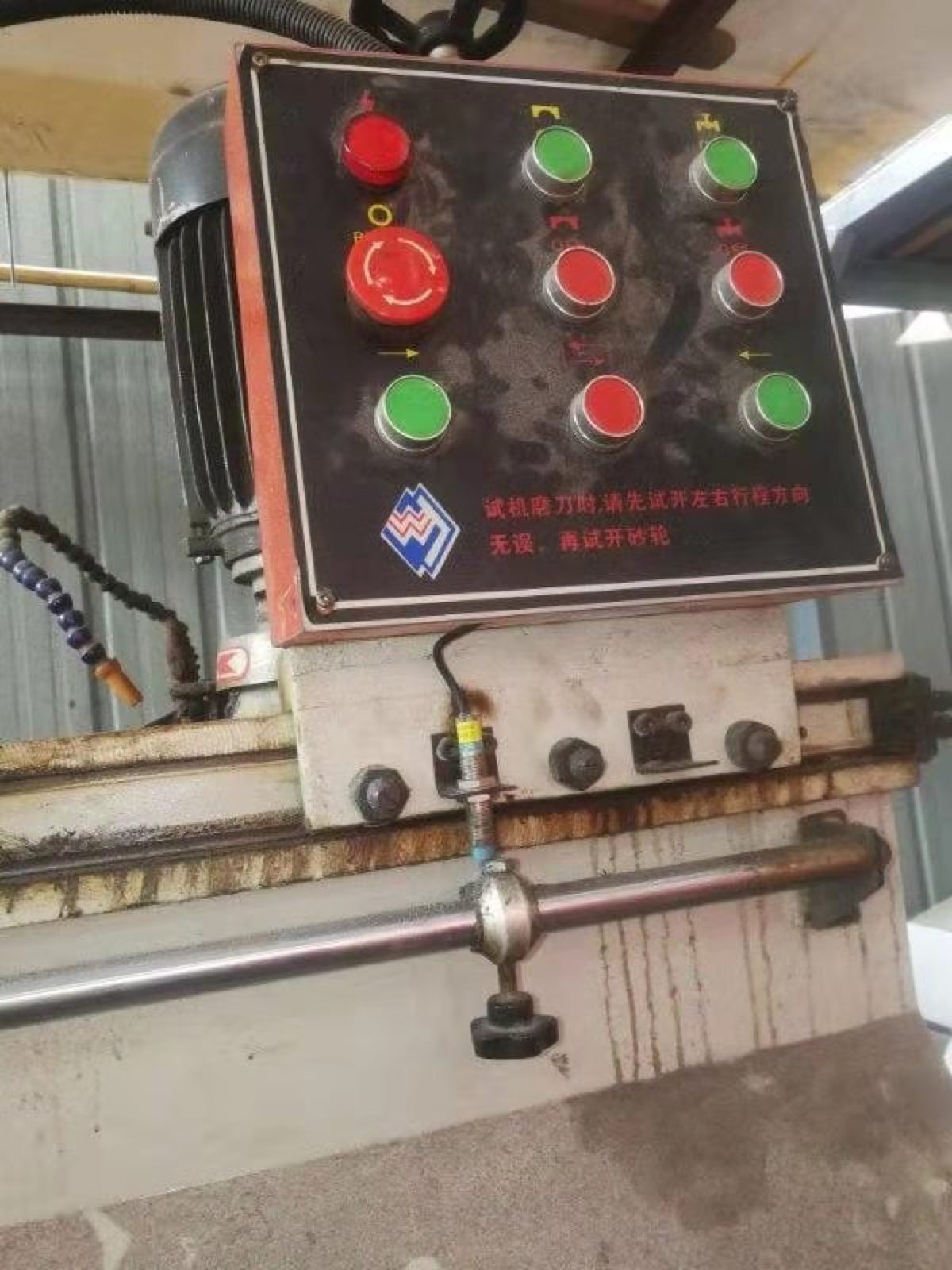
Remaining height—not cycle count—controls release
A planer knife may have few or many resharpening cycles; neither number proves it is safe to return to service. Measure remaining usable height from the agreed datum after grinding, then check it against the documented minimum clamping height. Leitz Lexicon states that dimensional tolerances must be observed when sharpening planer knives and that the minimum clamping width must not be exceeded.
Do not replace machine documentation with a generic discard figure. The Scheppach 1902207901 Instruction Manual specifies resharpening only down to a knife height of 16 mm for that machine. This is a machine-specific example, not a universal limit for planer knives, veneer knives, paper knives, or chipper knives.
Set the record before the first grinding cycle
Assign every knife a durable ID and record its cutterhead position or matched-set membership. Measure starting usable height from the agreed datum, then record blade width, thickness, bevel or setting reference, and the cutterhead or wedge minimum clamping dimension.
Confirm that the knife width range and chuck type fit the workpiece. A magnetic chuck may speed repeat handling where the knife material and setup allow it, while a clamp chuck may suit other holding conditions. Either method must secure the knife without hiding the measurement point or compromising the clamping land.
Log each cycle before releasing the knife
For every cycle, enter pre-grind height, post-grind height, material removed, wheel and dressing condition, coolant observation, operator, and inspection result. Record the grinder settings needed to repeat the setup. The log identifies when one knife loses more material than the rest of a matched set.
Programmable feed can improve removal consistency, but it does not replace measured height records. Leadermac USA lists programmable servo downfeed from 0.001 mm to 0.05 mm per pass and a digital angle display on its G Series straight knife grinders. EYAN lists CNC-controlled automatic wheel feed for roughing, finishing, and non-sparking grinding on its CVS-2500 straight knife surface grinder.
Stop grinding at the documented minimum dimension
Set the stop rule from cutterhead, wedge, and knife manufacturer documentation, then compare it with the post-grind result. If the knife is at or below the stated minimum clamping dimension, replace it instead of scheduling another pass. When one knife in a matched set has materially less remaining height, assess the set together.
| Decision factor | Manual record | Programmed grinder record |
|---|---|---|
| Height traceability | Depends on consistent operator entries | Still requires measured height entries |
| Material-removal consistency | Depends on setup and feed control | Supports repeatable downfeed settings |
| Matched-set review | Compare individual log sheets | Compare logged results by knife ID |
| Release decision | Check cutterhead minimum dimension | Check cutterhead minimum dimension |
Use records to plan matched-set replacement
Review the log before assembling knives into a cutterhead. Confirm remaining height, set identity, straightness tolerance, and inspection result for every member. A straight knife grinder category review helps buyers discuss capacity and workholding, but acceptance must remain tied to knife and cutterhead documentation.
For broader equipment comparison, see the blade grinding machine range, universal tool grinder category, and Weizhihao’s industrial grinding product range. Weizhihao manufactures relevant sharpening and grinding equipment for industrial knife applications. See the FAQ hub for more buyer guidance.
FAQ
FAQ: How do I know when a planer knife is too short to resharpen?
Measure post-grind usable height from the established datum and compare it with the cutterhead or wedge manufacturer’s minimum clamping dimension. Do not rely on cycle count or a generic height rule.
FAQ: Should every knife in a cutterhead have the same remaining height?
Keep matched sets under controlled review. If one knife has notably less remaining height or differs from the approved set condition, assess whether the set should be reground together or replaced.
FAQ: How much material should a straight knife grinder remove per pass?
Remove what is needed to restore the edge while following knife and cutterhead requirements. Record pre- and post-grind height so total removal guides the decision.
FAQ: Where is the minimum usable knife height specified?
Look first in cutterhead, wedge, planer, or knife manufacturer documentation. Ask the equipment supplier when the minimum clamping dimension is unclear.
Send a quote-ready inquiry
Send Weizhihao knife drawings or photos, knife width range, material, thickness, chuck preference, target straightness tolerance, coolant needs, and a sample height-record format. Ask for tooling, consumables, first-run training, shipment inspection, and acceptance-test details with your quotation. Start with a straight knife grinder quote request and make remaining-height control part of the evaluation from day one.