
TCT Saw Blade Grinder: B2B Buyer’s Guide
Compare blade compatibility, grinding operations, automation, sample tests and operating costs before choosing a TCT saw blade grinder.

Quick answer: A TCT saw blade grinder sharpens the tungsten carbide tooth tips on circular saw blades. Choose a machine by the blade dimensions, tooth geometry and grinding operations it can perform, then compare setup work, sample-grinding results and operating costs for your workshop.
Updated 28 September 2026.
Start with blade compatibility
Before comparing machines, list representative blades: maker or model, outside diameter, bore, tooth count and form, work material, and condition. Include markings, drawings, or clear photographs where available. These details help a supplier assess whether the proposed machine and tooling can hold and process them.
Compatibility is more than a diameter range. Tooth geometry and the work requested matter too. A blade may need one or more distinct operations, and those operations should be agreed explicitly. Face grinding works on the front face of a tooth; top grinding works on its top surface. Side grinding works on the tooth sides. These are different surfaces and operations. Do not assume that a machine offering face and top grinding also performs side grinding, or that a listed operation covers every tooth profile.
Ask the supplier to identify exclusions and setup requirements before quoting. See Weizhihao’s saw blade grinder range, then confirm a specific configuration against your blade list.
Choose automation around the real workflow
Map the path from blade arrival to return to production. Who inspects, mounts, selects the program, changes wheels, handles coolant or swarf, unloads, and records the result? Which steps repeat for each blade? This is more useful than choosing by a monthly blade-count threshold.
Automation can refer to different things. A machine may automate a grinding sequence after an operator has mounted and set up one blade. That single-blade automatic grinding does not by itself mean automatic loading and unloading or unattended operation. Ask which actions are automatic, which need an operator, and whether the proposed setup includes any blade handling equipment. Discuss guarding, operator training, maintenance, and service arrangements for the destination where the machine will be installed.
Use this workflow comparison to frame the discussion; supplier labels may differ.
| Approach | Typical workflow | Questions to resolve |
|---|---|---|
| Manual or operator-controlled | The operator carries out and controls more of the setup and grinding steps. | What skill and setup time are needed? Can the operator repeat the required tooth operations? |
| Partly automated | The machine automates selected steps, while the operator prepares, loads, monitors, or changes the job. | Which steps are included? How are blade types and tooth operations selected and checked? |
| CNC-controlled | A control system runs a configured sequence for a blade and operation. | Can the offered configuration handle the sample blades and requested operations? What setup, program, and operator tasks remain? |
| Grinding with blade handling | Grinding may be combined with separate loading or unloading equipment. | Is handling equipment included? What safeguards, changeovers, supervision, and recovery steps are required? |
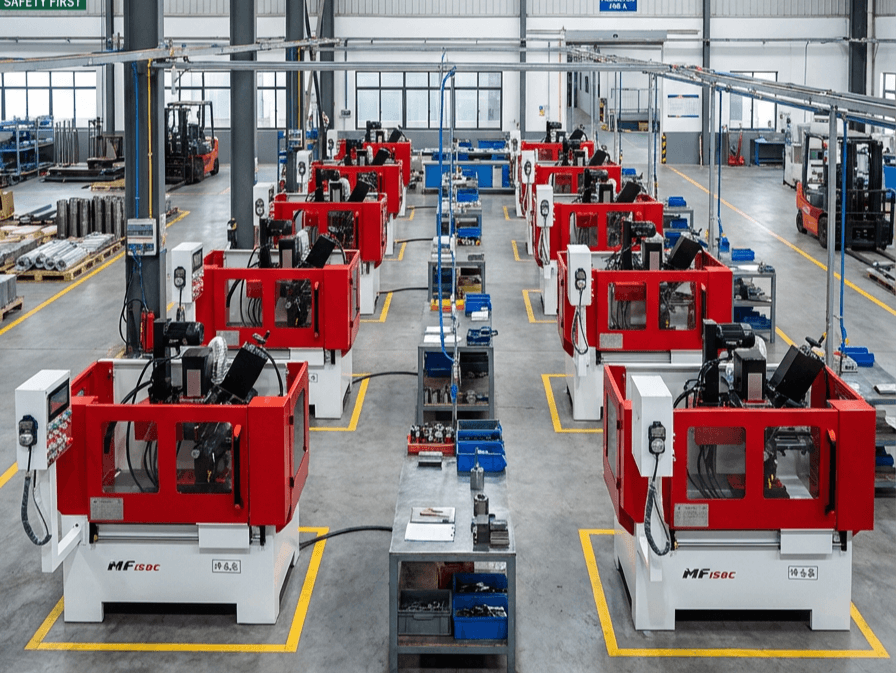
Review the MF158CNC fully automatic circular saw blade sharpening machine page as a model reference. Ask which grinding and handling functions are included in the offered configuration.
Use sample grinding to agree acceptance
Ask whether the supplier can assess samples or arrange a sample-grinding review. Select blades that reflect normal work and any important uncommon profile. Agree which operations are included, what the operator provides, and how results will be reviewed. Damaged blades may need assessment before a trial.
Have blade users and maintainers review the result against the blade maker’s or your approved requirements; inspect a cut in your process when practical. Record the tested blade, configuration, tooling, setup, operator tasks, limitations, and follow-up work. Ask which results apply to the quoted configuration and which blade types need further evaluation.
General accuracy or speed claims do not replace this review. Request information relevant to your acceptance criteria and record it in the offer or trial report.
Build the business case from your records
Collect representative records for labor (inspection, setup, grinding, handling, checking), wheels and consumables, maintenance, outside sharpening, blade purchases and disposals, and actual output. Track service-related delays if they affect production, and separate blade types when costs differ.
Compare your current process with the offer and trial results. Include operator training and work that remains external. Your blade mix, utilization, labor, consumables, service needs, and quality requirements determine whether the machine fits; generic savings or payback claims cannot replace your records.
What to include in a quotation request
- Your blade list: maker or model, outside diameter, bore, tooth count, tooth form, condition, and available drawings or photographs.
- The operation required for each blade type: face, top, side, or another specified tooth surface; identify separately any profile or edge treatment you need.
- The work context: material being cut, machine or production process, current sharpening route, and the result you need to accept.
- Your workflow: who loads, sets up, monitors, unloads, inspects, and changes jobs; state whether blade handling equipment is requested.
- Expected workload and schedule, based on your records, plus operator experience and available maintenance support.
- Requested configuration, included tooling and accessories, training, installation or service scope, delivery destination, and any site requirements you already know.
- How sample grinding and acceptance will be arranged, what information will be recorded, and which blade types or operations are outside the offer.
Send these details so the supplier can recommend a configuration, identify fit questions, and prepare a comparable quote. See the FAQ page or contact Weizhihao.
Frequently asked questions
Can one grinder sharpen every TCT blade in a workshop?
Do not assume so. Blade dimensions, tooth form, condition, and the required grinding surfaces all affect suitability. Provide a representative blade list and have the proposed configuration checked against it; arrange a sample review for important or unusual blades.
Are face grinding, top grinding, and side grinding the same operation?
No. They work on different tooth surfaces. Ask the supplier to state which operations the offered machine and configuration perform for each blade type. A listing for one operation does not establish that the other operations are included.
Does automatic grinding mean the machine loads blades and runs unattended?
No. Automatic grinding of a mounted blade describes the grinding sequence, not necessarily blade loading or unloading. Confirm the operator’s tasks and whether handling equipment is included. Establish supervision and safeguards for the actual installation.
How do I decide whether in-house sharpening makes sense?
Record your labor, consumables, outside sharpening, blade purchases, maintenance, and actual output. Compare those records with the machine offer and sample-grinding results, including setup and operator work. Your own workload and operating costs are the basis for the decision.
Email this quotation checklist to Weizhihao. Complete the blade details and attach photos before sending.
Need a machine quote? Send your blade type, size range, production needs, and destination country by WhatsApp, or use Contact Weizhihao. Machine videos are available on YouTube.
