
MF2535 Workpiece Photograph Pack for Knife Clamping Review
Use an MF2535 workpiece photograph pack to clarify nonstandard knife clamping needs before selecting a knife grinding machine.

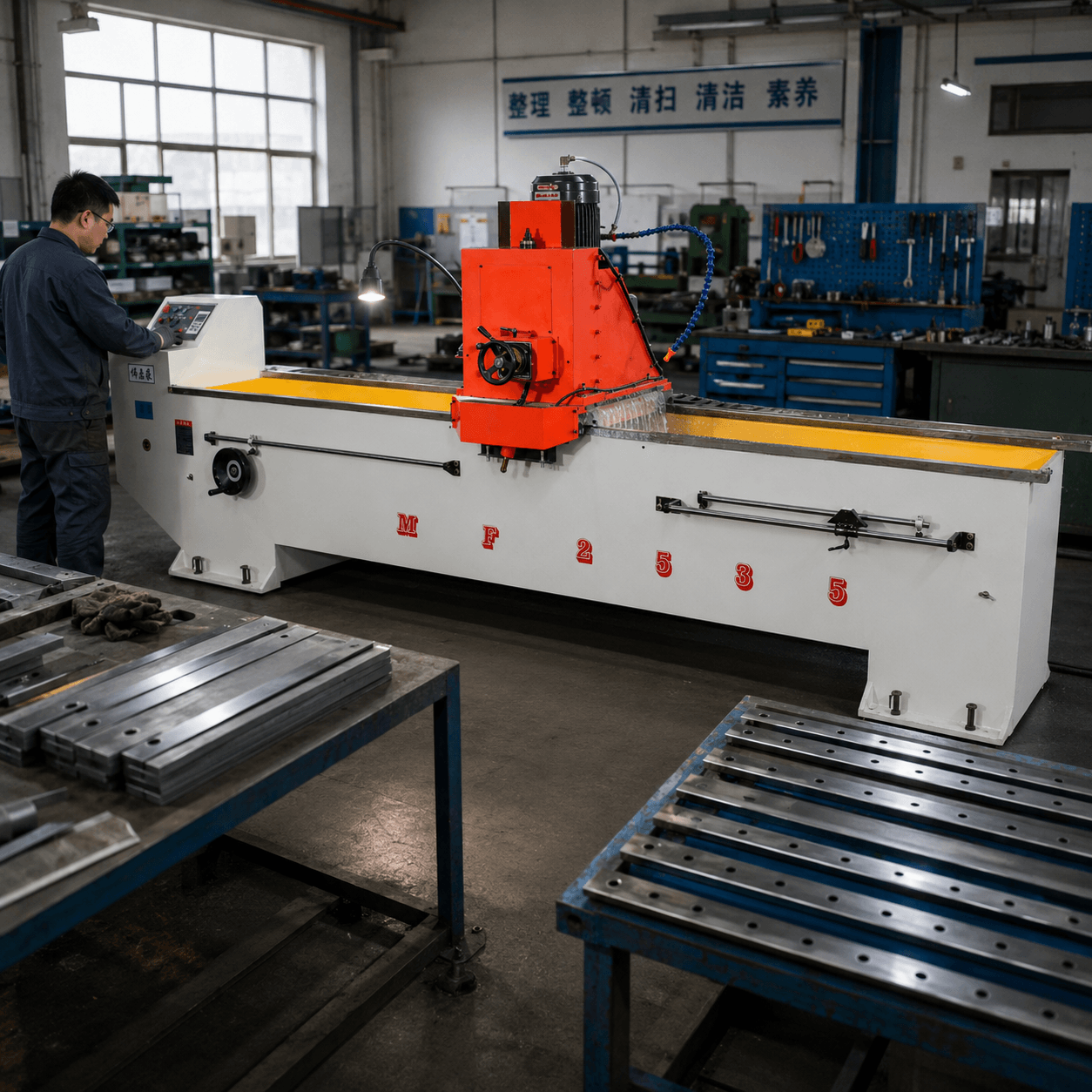
MF2535 Workpiece Photograph Pack for Knife Grinding Machine Clamping Discussions
Nonstandard blades often cannot be evaluated from length and width alone. Before discussing an MF2535 knife grinding machine configuration, buyers should prepare a focused workpiece photograph pack. Clear images help Weizhihao, a manufacturer of relevant sharpening and grinding equipment, understand clamping surfaces, clearance risks, blade condition, and the practical questions that should be resolved before a factory quote.
Why photographs matter for a knife grinding machine inquiry
A drawing is useful, but photographs show details that are easily omitted: bends, holes, tabs, stepped backs, welded areas, uneven thickness, wear patterns, and areas that must not contact the fixture. This is especially relevant for knives used in cabinet, panel, veneer, furniture, woodworking, packaging, and industrial cutting operations.
The goal is not to replace technical confirmation. It is to give the supplier enough visual context to identify what needs further measurement, fixture discussion, or sample review. Buyers comparing a straight knife grinder category should use the same discipline when their knives depart from a simple rectangular profile.
What to include in an MF2535 workpiece photo pack
1. Overall views with scale
Photograph both faces, both edges, and the full blade length. Put a ruler or clearly marked scale beside the knife. Record the actual blade length, knife width, thickness, and any variation along the workpiece. Include close-ups of the cutting edge and the rear clamping area.
2. Clamping and obstruction details
Take images of mounting holes, slots, protrusions, locator points, handles, welds, damaged corners, and curved or stepped sections. Photograph the knife lying flat and on edge. If the blade is distorted, show the affected zone rather than describing it only as “bent.” These views support a practical discussion of fixture contact and access for the grinding wheel.
3. Process and quality references
Add photos of the knife in its production position where possible, plus a marked image identifying the grinding face. State the requested edge condition and how straightness tolerance will be checked after grinding. If coolant restrictions, surface-finish expectations, or handling concerns apply, list them beside the images.
Turn images into an actionable clamping review
Send the pack with a short data sheet: material if known, quantity of knife types, frequency of resharpening, current grinding method, and the largest and smallest workpieces expected. Identify whether one fixture must cover several variants or whether dedicated tooling is acceptable. Ask which details require confirmation before an acceptance test.
For a heavy-duty linear application, review the MF2518/MF2535 heavy-duty CNC linear knife grinding machine page, then submit the images as part of the technical inquiry. Do not assume a clamp arrangement from a photo alone; confirm it against the final workpiece data and proposed tooling.
Questions for the quote and pre-shipment review
A useful factory quote should separate machine scope from any special tooling or consumables under discussion. Ask how the proposed setup will be demonstrated, which grinding wheel is considered for the application, and what spare parts are advisable for normal service. Before shipment, agree on the workpiece used for inspection, the measurement method, the acceptance criteria, and the photographs or video records to be supplied.
Buyers with mixed tool requirements can also compare the blade grinding machine range and the broader Weizhihao product range. For general procurement and documentation questions, consult the buyer FAQ.
Prepare your inquiry
Send your workpiece photographs, measured dimensions, target application, and required acceptance checks to request a technical clamping discussion and factory quote. A complete photo pack makes the conversation faster and helps both teams define the right next checks before production or shipment.
Frequently asked questions
FAQ: How many photographs should a nonstandard knife pack include?
Include enough views to show both faces, both long edges, both ends, the full workpiece with scale, and every unusual feature. Close-ups are important where the fixture may contact the knife.
FAQ: Can photographs replace a dimensional drawing?
No. Photographs provide context, while measured dimensions and tolerances provide the data needed for technical confirmation. Use both whenever possible.
FAQ: Why show the rear edge and mounting features?
They may affect where a knife can be supported or clamped and whether the grinding area remains accessible without interference.
FAQ: What should be agreed before an acceptance test?
Confirm the representative workpiece, proposed tooling, grinding scope, measurement method, straightness tolerance, and the inspection evidence required by the buyer.