
Knife Grinding Machine Quotations: Separate Machine Scope from Customer Tooling
Separate knife grinding machine capability from customer-supplied knives, fixtures and drawings to compare industrial quotations with confidence.

Knife Grinding Machine Quotations: Separate Machine Scope from Customer Tooling
Quick Answer: A knife grinding machine quotation must separate the supplied machine and its guaranteed capability from the buyer’s knives, drawings, fixtures, and application data. A standard grinder is not a proven solution for every blade. List special workholding and validation as named quote lines before comparing offers.
Why quotations can conceal a scope gap
Teams may compare grinding length, price, and delivery terms, then assume every offer will process the same knife. That fails when knife width, thickness, hole pattern, edge geometry, or clamping condition has not been reviewed. The real choice may be a base machine versus a machine with validated workholding.
Weizhihao describes its MF2518/MF2535 straight-blade sharpener series in versions from 1800 mm to 3500 mm for paper-cutter blades, planer blades, and CNC chipper knives (WEIZHIHAO, 2022). This establishes application context, but the quotation must still identify the buyer’s workpiece and fixture requirements. See the MF2518/MF2535 linear knife grinding machine for relevant product context.
Define the base machine scope first
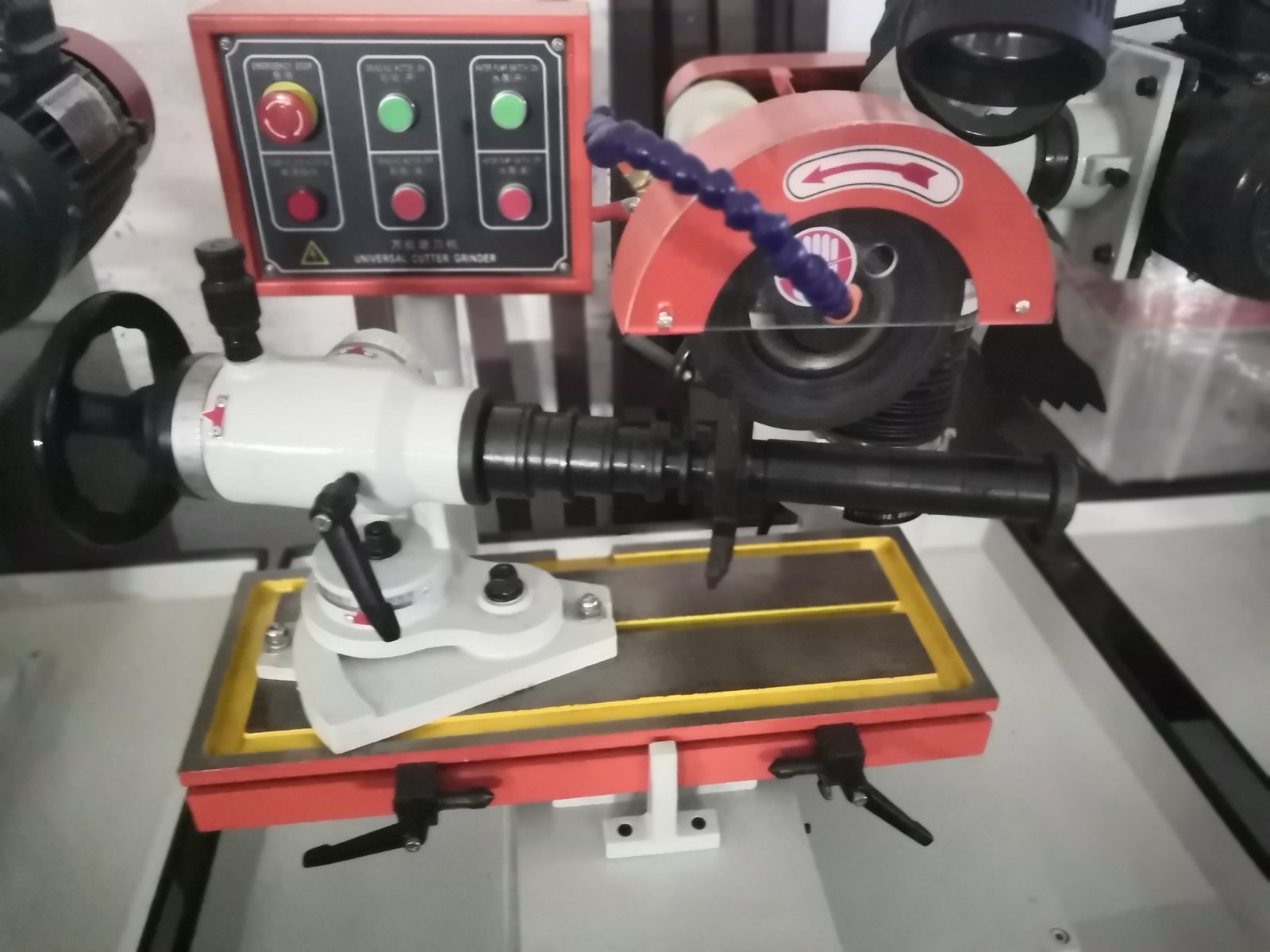
Ask the supplier to list the machine configuration before discussing a special knife. The list should cover usable blade length, knife width range, table or carriage arrangement, controls, standard chuck or clamps, grinding wheel, coolant, electrical requirements, spare parts, shipment packing, and training. It should also state the proposed straightness tolerance or surface requirement and how it will be checked.
Buyers can review the straight knife grinder range and the Weizhihao product range without treating a category description as a promise of application-specific tooling.
State buyer-supplied knife and tooling data
Provide a drawing or representative sample, blade dimensions, material, thickness, back angle, edge geometry, hole pattern, quantity per setup, and the machine or process using the knife. Krumar Knives (2026) says blade dimensions, quantity, application or machine type, and a technical drawing reduce dimensional ambiguity in an industrial-knife quote.
Identify the supplied knife as an acceptance-test workpiece, not simply a “sample blade.” Record its arrival condition, permitted stock removal, required edge result, measurement method, and return-transport responsibility. A factory quote should not imply that every future knife matches that sample.
Compare machine supply with buyer responsibility
| Decision item | Base machine scope | Buyer-supplied or separately validated scope |
|---|---|---|
| Capacity | Published travel and standard setup | Actual blade length, width, thickness, and condition |
| Workholding | Standard chuck or clamps listed in the quote | Special fixture, rests, hole-location adaptation, or stack setup |
| Grinding process | Specified wheel and coolant system | Material, edge geometry, stock allowance, and required finish |
| Acceptance | Machine checks and documented test arrangement | Approved test knife, output criteria, and sign-off measurements |
Quote special workholding as an option
Do not hide special clamps inside a general “accessories included” line. Colonial Saw (2026) identifies special clamping tools for disposable blades as optional and notes that stacked-knife step blocks require knife thickness and back-angle information. EX-FACTORY (2026) likewise states that a double-sided chipper-knife fixture requires knife specifications and hole spacing.
Request a separate line for fixture design, trial fitting, and validation when a standard magnetic chuck or clamp may not hold the knife safely and repeatably. This matters for wide blades, unusual hole patterns, thin stock, stacked knives, and damaged back faces. For other blade types, compare the appropriate blade grinding machine category rather than forcing an unsuitable setup.
Make the quotation an acceptance-test plan
The final quote should name the test workpiece, wheel and coolant, setup sequence, measurement points, allowable result, inspection record, and exclusions. Confirm whether training covers the validated fixture or only normal operation. Review these details before shipment inspection so the machine, tooling, consumables, and acceptance record match the purchase order.
Confirm tooling responsibility before ordering
For related buyer questions, visit the Weizhihao FAQ hub. Machine capacity is comparable only when knife and tooling conditions are stated separately and checked against the proposed setup.
FAQ: What knife dimensions should I provide before ordering?
Provide blade length, knife width, thickness, material, edge and back-angle details, hole pattern, quantity, and application. Send a drawing or sample when possible.
FAQ: Does a magnetic chuck hold every industrial knife?
No. Holding depends on knife material, contact area, flatness, thickness, shape, and process forces. Ask the supplier to confirm the proposed workholding against your knife data.
FAQ: Are special clamps and fixtures included with a CNC knife grinder?
Only if the quotation names them. Treat custom clamps, stack blocks, rests, and hole-pattern fixtures as separate scope items with a defined validation process.
FAQ: What should be included in a knife grinder acceptance test?
Specify the test knife, setup, grinding wheel, coolant, measurement method, output criteria, records, and sign-off responsibility before the test begins.
Next step: Send your knife drawing, sample details, application, and required acceptance checks to request a B2B quotation from Weizhihao. Weizhihao manufactures relevant sharpening and grinding equipment and can help separate base machine scope from the tooling that needs review.