
Saw Blade Sharpening Machine Specification Review for Brazil Sawmill Maintenance Teams
A practical specification review of saw blade sharpening machines for Brazil sawmill maintenance teams. Key checks on diameter, tooth profile, and TCT grinding.
Saw Blade Sharpening Machine Specification Review for Brazil Sawmill Maintenance Teams
For sawmill maintenance teams in Brazil, selecting the right saw blade sharpening machine is critical to keeping production lines running and reducing blade replacement costs. This specification review focuses on the key parameters that matter most for Brazilian sawmills processing tropical hardwoods and softwoods. Whether you are upgrading existing equipment or investing in a new saw blade sharpener, understanding these specifications will help you make an informed decision.
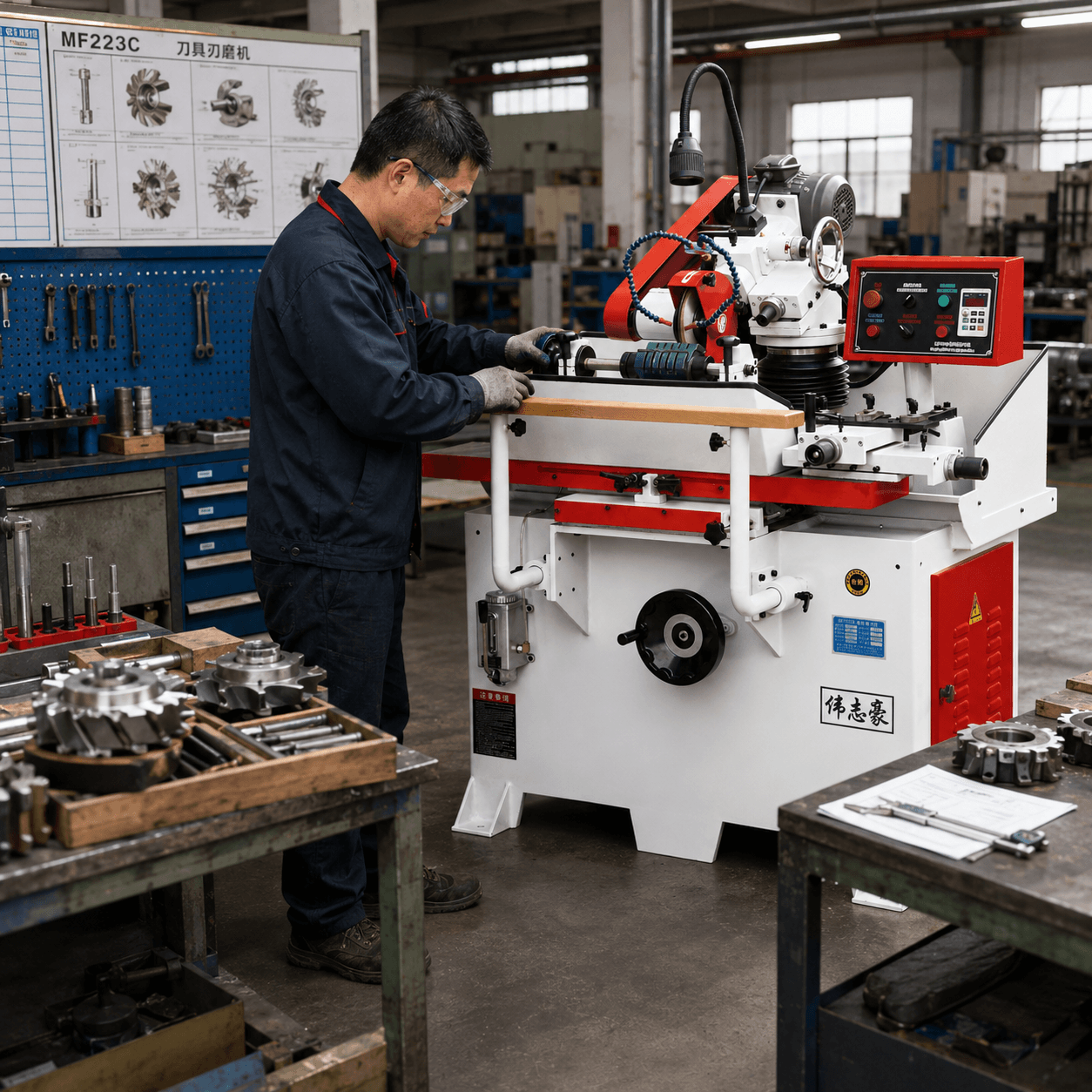
Key Specifications to Evaluate
Saw Diameter Range and Tooth Profile Compatibility
Brazilian sawmills often use blades from 200 mm to 800 mm in diameter. Ensure the saw blade grinder you choose can accommodate your full range. Check the maximum and minimum blade diameter, arbor hole size, and tooth pitch. Machines like those in the saw blade grinder category typically support multiple tooth profiles, including flat, alternate top bevel (ATB), and triple-chip grind (TCG). For TCT (tungsten carbide tipped) blades, confirm the grinding wheel type and dressing capability.
Top and Face Grinding Capability
Many sawmills require both top and face grinding to restore original tooth geometry. A circular saw blade sharpener with independent adjustment for each axis allows precise control. Verify the machine can handle the required tooth angles (hook angle, clearance angle, and bevel angle) for your specific cutting applications.
Manual vs. Automatic Operation
For high-volume sawmills, automatic or CNC-controlled circular saw blade grinding machines reduce operator fatigue and improve consistency. Manual machines may suffice for smaller shops. Consider the skill level of your maintenance team and the need for operator training when choosing between manual and automatic models.
Practical Buyer Checks
Grinding Wheel and Dressing System
The grinding wheel specification (grit, bond, and hardness) must match the blade material—especially for TCT blades. An integrated wheel dressing system ensures consistent sharpening results. Ask the supplier about recommended wheel types and dressing intervals.
Fixture and Clamping System
A robust fixture holds the blade securely during grinding. Check the clamping method (pneumatic, hydraulic, or manual) and whether it accommodates different arbor sizes. For sawmills with frequent blade changes, quick-change fixtures save time.
Spare Parts and After-Sales Support
Reliable after-sales support is essential. Confirm availability of spare parts such as grinding wheels, bearings, and electronic components. Weizhihao Machinery offers a range of sharpening equipment with global support. Review the warranty terms and response time for technical assistance.
Acceptance Testing and Inspection
Before finalizing a purchase, conduct acceptance tests. Run sample blades through the machine and measure tooth geometry with a protractor or digital gauge. Check for vibration, noise, and coolant flow. A quote request should include detailed specifications and test procedures.
Frequently Asked Questions
FAQ: What saw diameter range should I look for in a saw blade sharpening machine for a Brazilian sawmill?
Most Brazilian sawmills use blades between 200 mm and 800 mm. Choose a machine that covers your largest and smallest blade sizes. Some models support up to 1000 mm, which is useful for resaw operations.
FAQ: Can a saw blade sharpener handle TCT (tungsten carbide tipped) blades?
Yes, many modern saw blade sharpening machines are designed for TCT blades. Ensure the machine uses a diamond or CBN grinding wheel and has a dressing system to maintain wheel sharpness.
FAQ: What is the difference between manual and automatic saw blade grinders for sawmill use?
Manual machines require the operator to set each tooth angle and feed the blade manually. Automatic machines use CNC or cam-driven systems to grind each tooth consistently. For high-volume sawmills, automatic models improve throughput and reduce errors.
FAQ: How do I verify the accuracy of a circular saw blade grinding machine before purchase?
Request a test run with your own blades. Measure tooth height, hook angle, and runout after grinding. Check for uniform tooth geometry across the blade. Also inspect the machine’s build quality and alignment.
For a detailed specification review and to discuss your sawmill’s needs, contact Weizhihao Machinery for a quote and technical consultation.