
Manual vs CNC Grinder Workflows for Blade Sharpening Workshops | Weizhihao Machinery
Compare manual and CNC grinder workflows for blade sharpening workshops. Learn key differences in setup, precision, and throughput for B2B buyers.
How Blade Sharpening Workshops Compare Manual and CNC Grinder Workflows
In industrial blade sharpening, the choice between manual and CNC grinders directly impacts workflow efficiency, precision, and labor costs. This article compares both approaches to help workshop owners and importers make informed purchasing decisions.
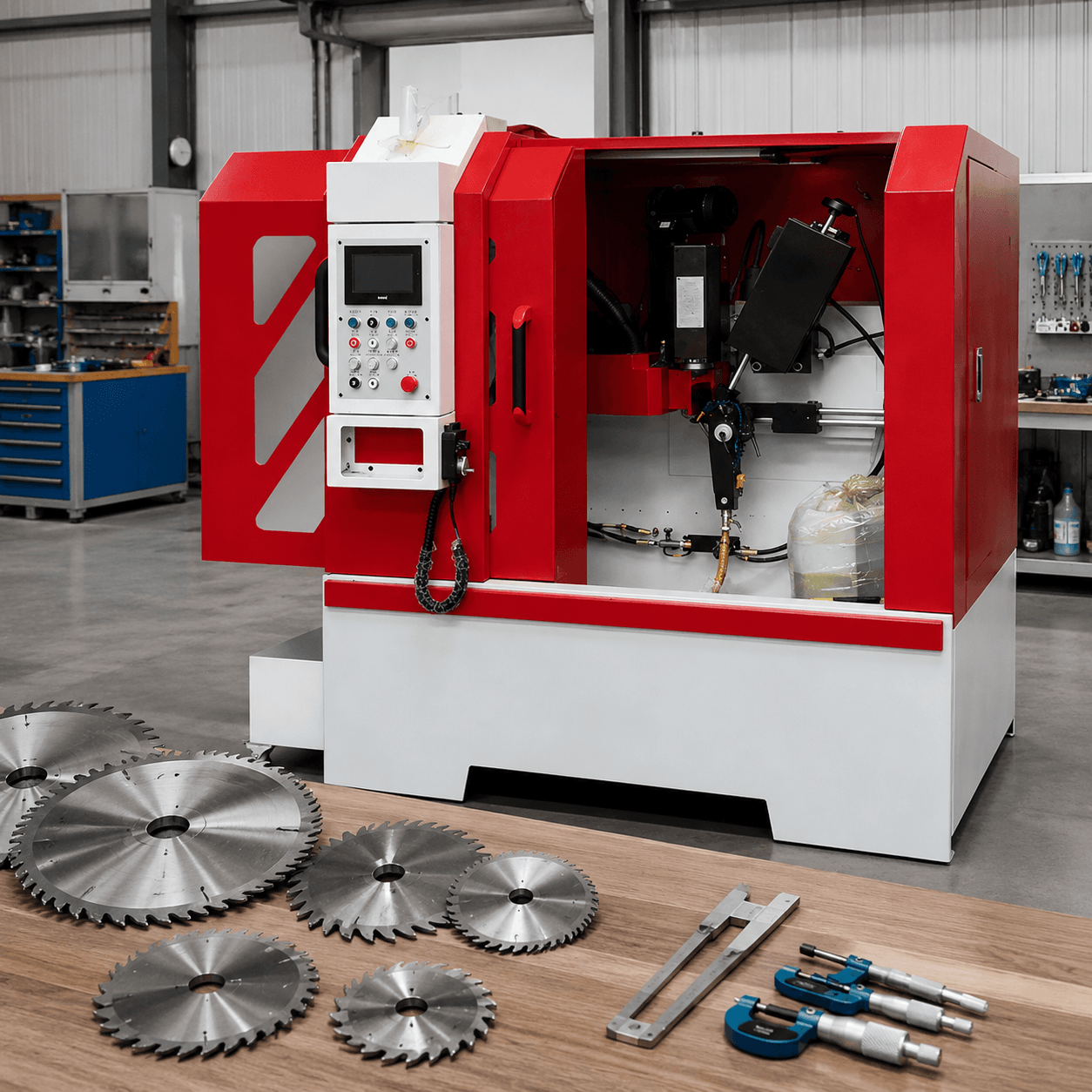
Manual Grinder Workflow: Operator Skill as the Core
Manual grinders rely heavily on the operator’s experience. The workflow typically involves:
- Setup: The operator manually mounts the blade, adjusts grinding wheel position, and sets feed rate based on visual inspection.
- Grinding: Continuous monitoring and manual adjustment of wheel contact and coolant flow. The operator must compensate for wheel wear and blade variations.
- Quality Control: Frequent stops to check edge geometry with gauges or magnifiers. Rework is common for complex profiles.
Manual workflows are flexible for low-volume, high-variety jobs but require skilled labor. For workshops handling diverse blade types, a universal tool grinder can offer versatility.
CNC Grinder Workflow: Automation and Repeatability
CNC grinders use pre-programmed parameters to automate the sharpening process. Typical steps include:
- Programming: Operators input blade geometry, grinding wheel specs, and pass sequences via a control panel or offline software.
- Automated Grinding: The machine executes multiple axes simultaneously, with automatic wheel dressing and coolant regulation.
- In-Process Gauging: Many CNC grinders include sensors for real-time measurement, reducing the need for manual inspection.
CNC workflows excel in high-volume production of standard blades, such as those sharpened on a saw blade grinder. They ensure consistent quality and lower per-blade labor costs.
Key Comparison Factors
Setup Time
Manual grinders require 5–15 minutes per job change, depending on complexity. CNC grinders may take 10–30 minutes for programming but then run unattended.
Precision and Repeatability
Manual grinders achieve tolerances of ±0.05 mm with skilled operators. CNC grinders consistently hold ±0.01 mm or better.
Throughput
For identical blades, CNC grinders can process 2–3 times more pieces per shift due to reduced idle time.
Labor Requirements
Manual shops need experienced sharpeners who are hard to find. CNC shops can train operators in weeks.
Choosing the Right Workflow
Workshops with high mix/low volume often prefer manual grinders for flexibility. Those with high volume or tight tolerances benefit from CNC automation. Many successful operations use both: manual for prototypes and repairs, CNC for production runs.
Frequently Asked Questions
FAQ: Can a manual grinder achieve the same precision as a CNC grinder?
In the hands of a master operator, manual grinders can approach CNC precision for simple geometries. However, CNC grinders consistently maintain tighter tolerances over long runs and complex profiles.
FAQ: What is the typical ROI period for a CNC grinder in a blade sharpening workshop?
ROI depends on volume and labor costs. For a shop processing over 500 blades per week, a CNC grinder often pays for itself within 12–18 months through reduced labor and rework.
FAQ: Do CNC grinders require more maintenance than manual ones?
CNC grinders have more components (servo motors, ball screws, controllers) that may need periodic service. However, automated dressing and coolant systems can reduce grinding wheel waste and extend machine life.
FAQ: Can I retrofit a manual grinder with CNC controls?
Retrofitting is possible for some models but often cost-prohibitive. It is usually more economical to purchase a dedicated CNC grinder designed for your blade types.
Make an Informed Purchase
Whether you choose manual or CNC, evaluate your blade mix, volume, and labor market. For a wide range of grinding solutions, explore our complete product line. Contact our team for a workflow assessment tailored to your workshop.