
Industrial Knife Grinder Safety & Accuracy Checklist for Factory Buyers
A comprehensive safety and accuracy checklist for industrial knife grinder buyers. Ensure operational safety and precise grinding in your factory environment.

Industrial Knife Grinder Safety & Accuracy Checklist for Factory Buyers
Selecting an industrial knife grinder is a critical capital expenditure for any manufacturing facility, workshop, or resharpening service. Beyond initial price and throughput, the long-term success of this investment hinges on two non-negotiable pillars: operator safety and consistent grinding accuracy. A machine that compromises either will lead to increased operational risk, higher tooling waste, and diminished product quality. This checklist is designed for factory buyers, importers, and procurement teams to systematically evaluate potential machinery and establish protocols for safe, precise operation from day one.
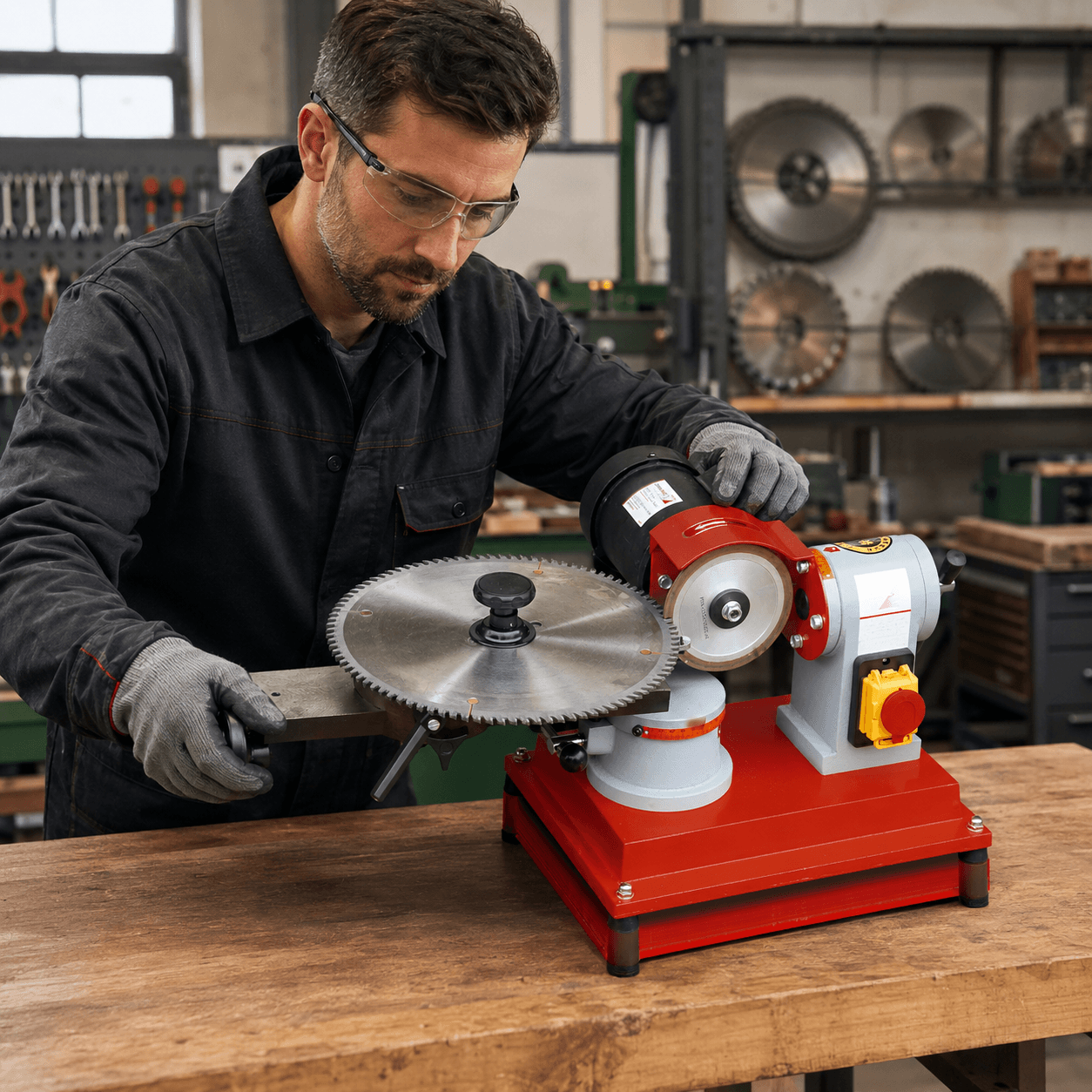
Why a Dedicated Checklist Matters for B2B Buyers
In a B2B context, the consequences of overlooking safety and accuracy are amplified. An accident can result in costly downtime, regulatory penalties, and reputational damage. Inaccurate grinding leads to premature tool failure, inconsistent workpiece quality, and ultimately, dissatisfied end customers. A structured evaluation checklist transforms the purchasing process from a simple comparison of features into a rigorous risk and performance assessment. It ensures your investment aligns with both your production goals and your duty of care obligations.
Core Safety Checklist for Industrial Knife Grinders
Safety must be the foundational consideration. A machine’s design and included safeguards directly protect your most valuable asset: your workforce.
Machine Guarding and Enclosures
Inspect the primary grinding zone. Effective machines feature robust, interlocked guards that physically prevent operator contact with the grinding wheel and the workpiece during operation. The enclosure should contain sparks, coolant mist, and potential debris. Verify that safety switches immediately halt wheel rotation if a guard is opened.
Emergency Stop and Control Reliability
Test the emergency stop (E-stop) function. It must be prominently colored, easily accessible from the normal operating position, and designed to cut all power to the grinding spindle and feed mechanisms upon activation. Controls should be clearly labeled, logically arranged, and require deliberate action to start the machine to prevent accidental engagement.
Dust and Chip Management
Effective extraction is not just about cleanliness; it’s a safety and accuracy imperative. Built-in or integrated ports for connecting to a centralized or dedicated dust collection system are essential. Poor extraction leads to hazardous airborne particulates, reduced visibility, and abrasive dust contaminating precision machine guideways and spindles, degrading accuracy over time.
Electrical and Structural Integrity
Require documentation of compliance with international electrical safety standards (e.g., IEC, CE). The machine frame and base should exhibit minimal vibration, indicating solid construction. Loose components or excessive vibration during a test run are red flags for both safety hazards and poor grinding results.
Grinding Accuracy & Precision Verification
Accuracy is what delivers value. It determines tool life, finish quality, and the repeatability of your resharpening process.
Spindle Runout and Rigidity
The heart of accuracy is the spindle. Demand data on spindle runout specifications. Ultra-low runout (measured in microns) is critical for achieving a sharp, consistent edge. The spindle must also be rigidly mounted to resist deflection under load, which would cause uneven grinds.
Guideway and Feeding System Quality
Precision linear guideways and backlash-free ball screws (especially on CNC or automatic models) ensure that the tool or wheel moves exactly as commanded. For manual machines, ensure the cross-feed and longitudinal feed handles operate smoothly without play. A jerky or loose feed system makes consistent geometry impossible.
Wheel Balancing and Dressing Capability
An imbalanced grinding wheel is a direct cause of vibration, poor surface finish, and accelerated wear. The machine should facilitate easy wheel balancing. Furthermore, an integrated or compatible diamond dresser is vital for maintaining the wheel’s true shape and cutting efficiency, which is fundamental to repeatable accuracy.
Coolant System and Temperature Control
Proper coolant application prevents thermal damage to the tool steel, which can ruin its temper. A well-designed system delivers coolant directly to the grinding zone with adjustable flow and filtration. Consistent temperatures ensure consistent material removal and prevent distortion.
Integration into Your Workflow: Supplier Evaluation
The machine itself is only part of the equation. The supplier’s support ensures your checklist translates into real-world performance. Evaluate their pre-sales technical consultation to ensure the machine is configured for your specific tool types, such as those processed on profiling knife sharpening machines. Inquire about comprehensive installation supervision and operator training programs. Finally, verify the availability of critical spare parts and the technical expertise of their after-sales service team. A reputable manufacturer like Weizhihao Machinery will provide clear documentation and support for all safety and accuracy features.
Maintenance: Sustaining Safety and Accuracy
Procuring a safe and accurate machine is step one. Implementing a disciplined maintenance schedule is how you preserve that value. This includes daily cleaning of coolant tanks and guideways, regular inspection of guards and electrical connections, and periodic professional spindle and precision alignment checks. Document all maintenance activities to create an audit trail and predict component lifespans.
FAQs
FAQ: What is the most critical safety feature to verify on a new knife grinder?
While all safety features are important, the integrity and interlocking of the wheel guard is paramount. A fully enclosed, interlocked guard is the primary physical barrier preventing catastrophic wheel breakage from harming operators. Always test its function before accepting the machine.
FAQ: How can I verify grinding accuracy before purchasing a machine?
Request a live video demonstration grinding a sample of your actual tools. Ask for close-up shots of the finished edge and, if possible, measurements of key geometries like clearance angles. For high-volume purchases, a factory visit to test-run the machine on your materials is the gold standard for verification.
FAQ: Does machine weight indicate better accuracy?
Generally, a heavier, more robustly built machine will provide better vibration dampening, which is beneficial for accuracy. However, weight alone is not a guarantee. The quality of the spindle, guideways, and controls are equally, if not more, important factors. A well-designed medium-weight machine can outperform a poorly designed heavy one.
FAQ: Why is coolant system quality so important for accuracy?
Coolant does more than cool; it lubricates and flushes away chips. An inadequate system leads to thermal stress, which can warp the tool being ground, and chip re-deposition, which scratches the finished surface. Consistent, filtered coolant delivery is essential for a mirror-finish grind and repeatable geometry.
Request a Detailed Technical Consultation
Ready to evaluate your next industrial knife grinder with confidence? The team at Weizhihao Machinery is prepared to assist. We provide in-depth technical specifications for our complete range, from versatile universal tool grinders to specialized models. Contact us today with your specific tool materials, production volume, and accuracy requirements to receive a tailored recommendation and safety feature breakdown.
