
Industrial Grinding Machine Buyer Questions & Supplier Checklist (2025) | Weizhihao Machinery
Essential questions and a supplier checklist for industrial grinding machine buyers. Ensure precision, reliability, and value in your 2025 procurement.
Industrial Grinding Machine Buyer Questions and Supplier Checklist
Procuring industrial grinding machines is a significant capital investment. For factory managers, importers, and purchasing teams, the process involves navigating technical specifications, evaluating suppliers, and ensuring long-term operational value. This guide addresses the critical questions buyers ask and provides a comprehensive checklist for vetting potential suppliers, helping you make an informed decision for your 2025 procurement cycle.
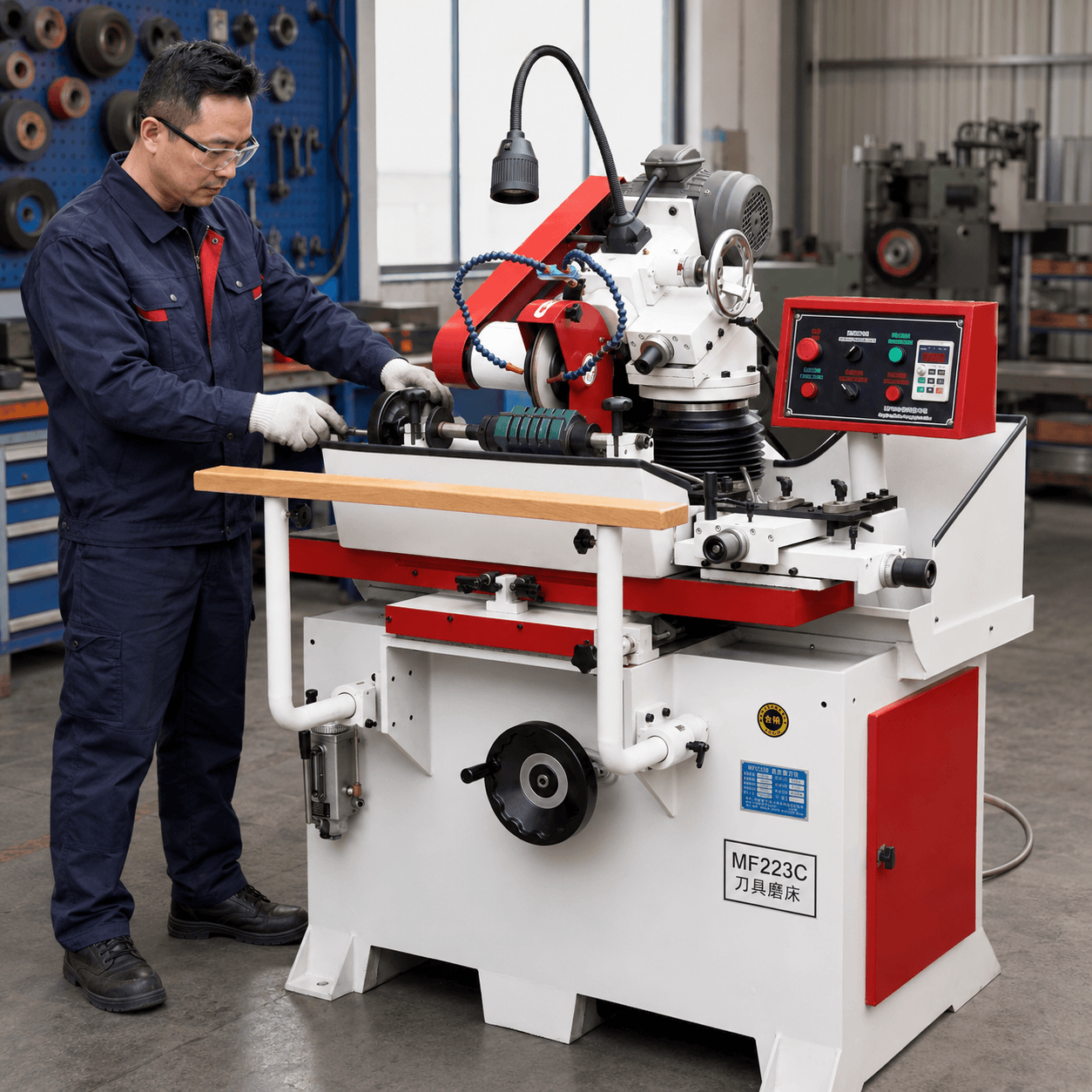
Key Questions Every Industrial Grinder Buyer Should Ask
Before sending an inquiry, clarity on your requirements and the supplier’s capabilities is paramount. Asking the right questions saves time and prevents costly mismatches.
1. What are the machine’s core specifications and capabilities?
Move beyond the model name. Ask for detailed specifications: grinding wheel size and type, spindle power (kW/HP), maximum grinding length/width/diameter, and control system (CNC or manual). For specialized applications like saw blade grinding, verify compatibility with your blade materials (e.g., TCT, HSS) and tooth geometries. Request sample grinding reports or videos to validate performance claims.
2. How does the supplier ensure quality control and consistency?
Inquire about their manufacturing process. Do they use in-house machined castings? What are the tolerances for guideways and spindles? Ask for their quality control documentation, such as ISO 9001 certification, and how they test each machine before shipment (e.g., vibration analysis, geometric accuracy checks).
3. What is the total cost of ownership (TCO)?
The purchase price is only the beginning. Discuss long-term costs: availability and price of spare parts, expected lifespan of critical components like grinding wheels and bearings, energy consumption, and recommended maintenance schedules. A reliable supplier will provide a clear TCO breakdown.
4. What technical support and training are provided?
Post-sale support is crucial for maximizing uptime. Clarify the warranty terms, response time for technical issues, and availability of remote diagnostics. Do they offer installation supervision, operator training, or detailed maintenance manuals? For complex universal tool grinders, comprehensive training is essential.
The Ultimate Supplier Vetting Checklist for 2025
Use this checklist to systematically evaluate potential grinding machine suppliers.
Manufacturing & Quality Assurance
- Factory Audit: Can they provide a virtual or in-person factory tour? Do they own their manufacturing facility?
- Material Sourcing: Ask about the origin and grade of critical components (castings, motors, ball screws, linear guides).
- Inspection Reports: Request sample quality inspection reports for machines in production.
Technical & Application Expertise
- Case Studies: Ask for references or case studies from clients in your industry (e.g., woodworking, metalworking, blade sharpening).
- Sample Processing: Can they process your specific tools or materials for testing?
- Technical Documentation: Ensure they provide complete electrical drawings, hydraulic diagrams, and programming manuals.
Logistics, Compliance & Partnership
- Export Experience: Verify their experience with shipping to your region and knowledge of local compliance (CE, UL, etc.).
- Lead Time & Communication: Establish clear timelines and a single point of contact for project management.
- Spare Parts Logistics: Confirm they have a system for efficiently shipping spare parts globally.
Matching the Machine to Your Application
The “best” grinder is the one that fits your specific production needs. A straight knife grinder is ideal for planer and moulder knife sharpening workshops, offering simplicity and speed for standard geometries. For facilities that service a variety of circular saw blades, a dedicated saw blade grinder is engineered for high-volume, precise tooth re-sharpening. If your workshop handles diverse tooling—from drill bits to end mills and complex profiles—a versatile universal tool grinder provides the necessary flexibility, albeit with a steeper learning curve.
Finalizing Your Procurement Decision
After shortlisting suppliers based on the checklist, request detailed, written quotations that break down machine price, shipping, and any optional tooling. Compare not just on price, but on the depth of their answers to your initial questions. The right supplier acts as a consultative partner, offering technical solutions and ongoing support to enhance your productivity.
Ready to Source Your Next Grinding Machine?
Weizhihao Machinery is committed to providing industrial buyers with transparent information, reliable machinery, and dedicated support. Contact our engineering team today to discuss your specific requirements, request detailed specifications, and receive a comprehensive quotation. Let us help you find the optimal grinding solution for your workshop.
Frequently Asked Questions (FAQ)
FAQ: How do I determine the right type of grinding machine for my workshop?
Start by analyzing the tools you most frequently need to sharpen or grind. List their materials, geometries, and required tolerances. A workshop primarily sharpening circular saw blades should prioritize a specialized saw blade grinder. For mixed tooling (end mills, drills, step tools), a universal tool grinder is more appropriate. Weizhihao’s sales engineers can assist you with a free application analysis to match your needs with the correct machine category.
FAQ: What is the most important factor when comparing suppliers from China?
Beyond price, focus on verifiable manufacturing capability and post-sales support. Ask for direct evidence of quality control (inspection videos, reports), speak with past clients if possible, and clarify the entire support structure—from remote technical assistance to spare parts availability. A supplier’s willingness to provide this information is a strong indicator of reliability.
FAQ: Can I get a machine customized for my unique tooling?
Many professional manufacturers, including Weizhihao, offer customization services. This can range from modifying the control software to accommodate a specific tooth pitch on a saw blade grinder, to designing special fixtures for a universal tool grinder. It is critical to provide detailed drawings or samples of your tooling during the inquiry stage for an accurate assessment and quote.
FAQ: What should be included in a technical inquiry to get an accurate quote?
A comprehensive technical inquiry speeds up the process and ensures an accurate proposal. Include: 1) The types and materials of tools you grind; 2) Required production capacity (e.g., blades per hour); 3) Desired precision and surface finish; 4) Any space or power constraints; 5) Your specific delivery timeline. Providing this information upfront allows suppliers to recommend the most suitable model and configuration.