
Coolant Filtration Questions for Knife Grinding Machine Buyers | Weizhihao Machinery
Get answers to key coolant filtration questions for knife grinding machines. Learn how proper filtration improves blade quality and machine life.
Coolant Filtration Questions for Knife Grinding Machine Buyers
When investing in a knife grinding machine, coolant filtration is often overlooked but critical for consistent blade quality and machine longevity. Industrial buyers must understand how filtration affects grinding precision, wheel life, and operating costs. This article answers the most common coolant filtration questions for knife grinding machine buyers.
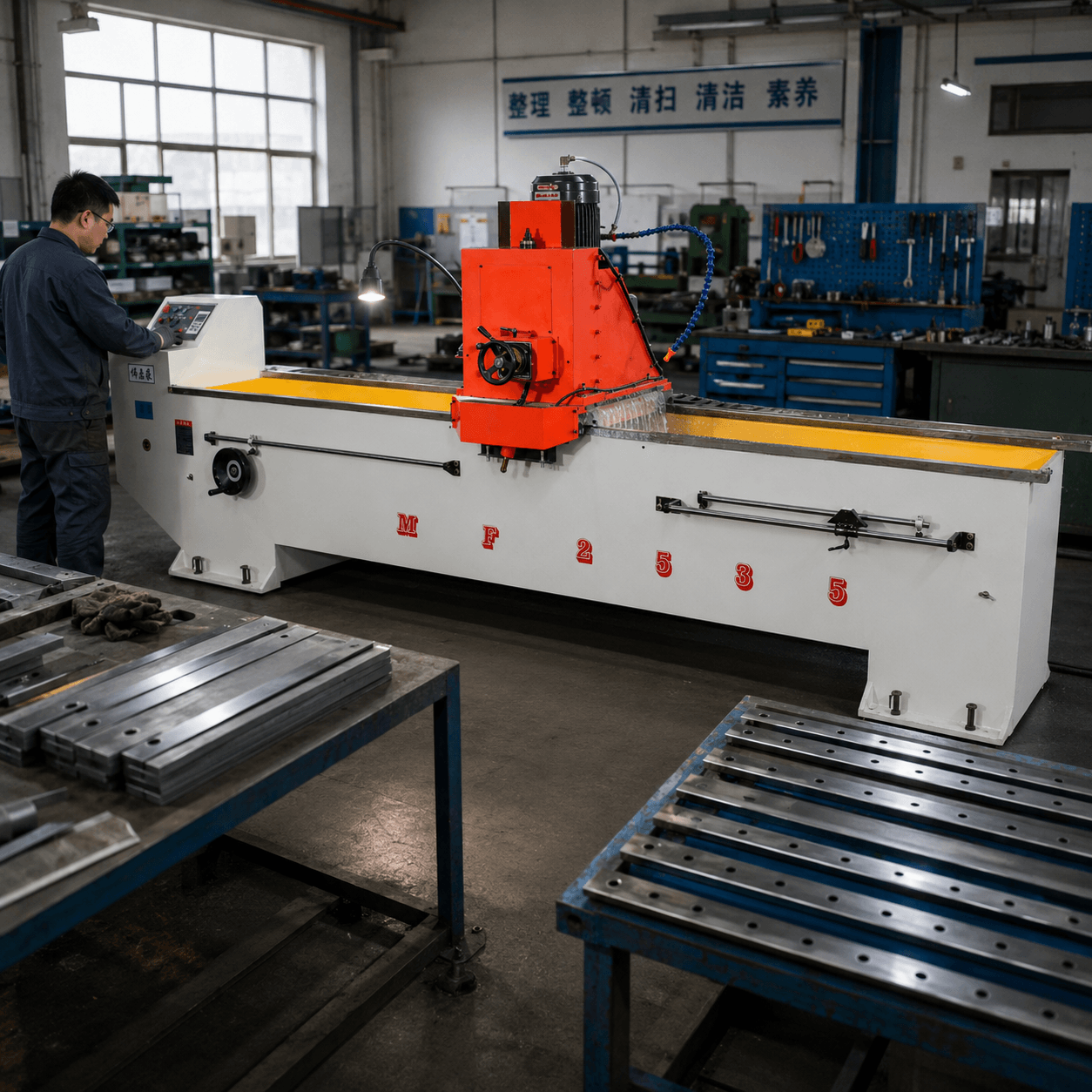
Why Coolant Filtration Matters in Knife Grinding
Coolant serves multiple purposes: cooling the grinding zone, lubricating the wheel-workpiece interface, and flushing away swarf. Without effective filtration, contaminants recirculate, causing:
- Reduced grinding accuracy due to particle embedding
- Faster wheel wear and increased dressing frequency
- Poor surface finish on knives
- Shorter coolant life and higher disposal costs
For high-volume resharpening or precision knife production, a robust filtration system is non-negotiable.
Key Coolant Filtration Questions Answered
FAQ: What filtration level do I need for knife grinding?
The required filtration level depends on the grinding application. For rough grinding of straight knives, a 50-100 micron filter may suffice. For fine finishing of profile knives or saw blades, aim for 10-25 micron filtration to prevent surface defects. Many industrial knife grinders from Weizhihao’s straight knife grinder range offer optional high-precision filtration upgrades.
FAQ: How does coolant filtration affect grinding wheel life?
Clean coolant reduces wheel loading (clogging of pores with swarf) and thermal damage. Studies show that proper filtration can extend wheel life by 30-50%. For saw blade grinders, where wheel geometry is critical, filtration directly impacts tooth geometry consistency.
FAQ: What are the common filtration methods for knife grinders?
Common methods include:
- Gravity settling tanks: Low cost but only remove coarse particles.
- Paper or cartridge filters: Effective for fine filtration but require regular replacement.
- Hydrocyclone separators: No consumables, ideal for high-flow applications.
- Magnetic separators: Remove ferrous swarf efficiently, often used as a pre-filter.
Many modern machines combine multiple stages for optimal cleanliness.
FAQ: Can I retrofit a better filtration system to an existing grinder?
Yes, in most cases. Standalone filtration units (e.g., paper bed filters or centrifugal separators) can be plumbed into the coolant loop. However, ensure the pump capacity matches the added resistance. Consult with the machine manufacturer or a filtration specialist before retrofitting.
Choosing the Right Filtration for Your Knife Grinder
When evaluating a knife grinding machine, ask the supplier:
- What is the standard filtration micron rating?
- Are higher-grade filters available as options?
- What is the coolant tank capacity and flow rate?
- How easy is it to clean or replace filter elements?
For workshops handling diverse knife types, a universal tool grinder with adjustable filtration may offer flexibility.
Conclusion
Coolant filtration is a small investment that pays off in blade quality, wheel life, and reduced downtime. By asking the right questions upfront, you can ensure your knife grinding machine delivers consistent, high-precision results for years.
Ready to Upgrade Your Knife Grinding Setup?
Contact Weizhihao Machinery for expert advice on coolant filtration options tailored to your production needs. Our team helps industrial buyers select the right grinding machine and filtration system for optimal performance.