
Circular Saw Blade Sharpener Spare Wheel Storage Plan for Greece
Build a practical spare wheel storage plan for a circular saw blade sharpener in Greece carpentry tool rooms, with purchasing and inspection checks.

Circular Saw Blade Sharpener Spare Wheel Storage Plan for Greece Carpentry Tool Rooms
A circular saw blade sharpener can only support reliable in-house resharpening when its consumables are available, identifiable, and protected. For Greece carpentry tool rooms, a spare wheel storage plan should connect the blades processed, the wheel types approved for the machine, the receiving process, and the operator’s inspection routine. The aim is not to hold excessive stock; it is to prevent avoidable interruption while keeping wheels in usable condition.
Circular Saw Blade Sharpener: Start with a wheel register
Create one register for every spare grinding wheel. Record the supplier reference, wheel type, dimensions stated on its label, intended blade material or tooth operation, date received, and storage location. Link each entry to the relevant circular saw blade sharpener setup and approved fixture arrangement. This makes it easier for a purchasing team to distinguish a replacement wheel from an unverified item that happens to fit physically.
Ask the tool-room supervisor to review the register with actual blade demand. Separate routine resharpening wheels from wheels used less often for special blade work. A simple reorder point based on normal use, incoming inspection time, and the team’s purchasing cycle is more useful than a fixed quantity copied from another workshop.
Set up storage that protects wheel condition
Store wheels in a clean, dry, clearly marked area away from impact, uncontrolled vehicle movement, and mixed tooling. Keep original labels and protective packaging where practical. The storage method should prevent edge damage, contamination, and confusion between similar wheels. Do not stack or handle wheels in a way that could chip, crack, or otherwise compromise them; follow the wheel supplier’s handling and storage guidance.
Use separate locations for unopened stock, inspected ready-to-use stock, and wheels held for review. This status control is valuable when several operators share a tool room. Before fitting a wheel, the operator should verify the label, inspect its condition, and confirm compatibility with the assigned machine and task.
Make receiving and acceptance checks part of the plan
At receipt, compare the packing list with the order and check that wheel identification is readable. Record visible transport damage and quarantine questionable items before they enter available stock. During machine acceptance discussions, request clarity on the supplied wheel list, dressing approach, fixtures, operating guidance, and recommended spare-parts list. These checks help buyers compare offers without assuming that all wheel packages or support arrangements are identical.
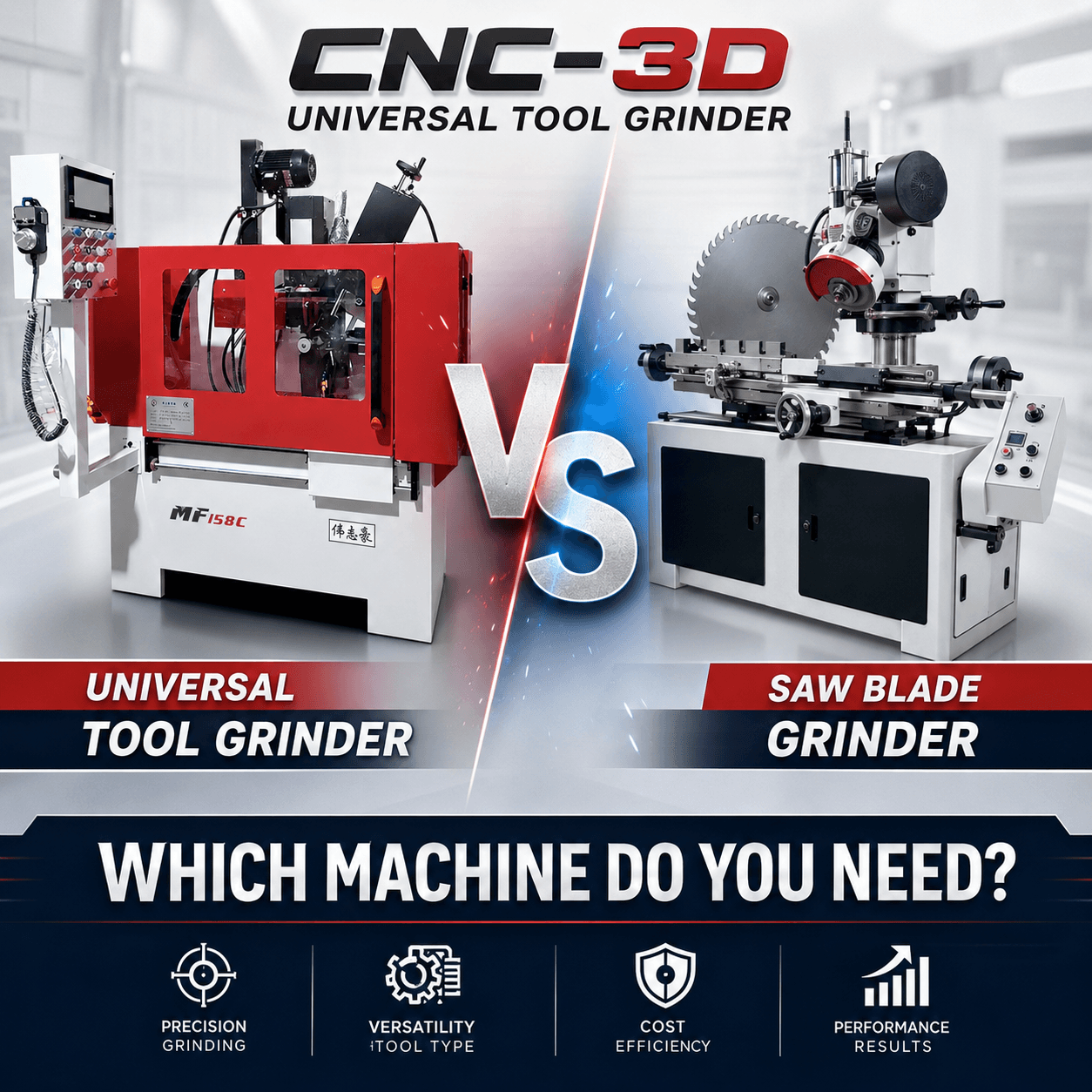
Weizhihao manufactures relevant sharpening and grinding equipment. Buyers can review its saw blade grinder category, compare related universal tool grinder options, and see the wider industrial grinding product range before defining a request.
Give operators a simple issue-and-return process
Issue wheels only against a machine and job record. On return, note whether a wheel remains approved for use, needs dressing or inspection, or should be isolated. Training should cover safe handling, machine-specific fitting checks, and when to stop and escalate a concern. Maintain a small record of wheel consumption alongside blade workload; it will make future factory quote discussions more accurate than a generic spare-parts request.
Inquiry checklist for Greece buyers
When requesting a quote, provide blade diameters and tooth styles handled, expected resharpening volume, the existing or planned machine model, wheel references already in use, voltage needs, and preferred shipment documentation. Ask which consumables and fixtures are included, what pre-shipment inspection evidence can be supplied, and what operator training material accompanies the equipment. Use the buyer FAQ to prepare further questions, then send a detailed quote request to Weizhihao for a practical review.
Frequently asked questions
FAQ: How many spare wheels should a carpentry tool room keep?
Set stock from actual blade volume, approved wheel applications, inspection lead time, and purchasing cycle. Keep the calculation documented and review it as workload changes.
FAQ: Can visually similar wheels be stored together?
They may be in the same controlled area, but each item needs clear identification and a distinct location or status label to prevent selection errors.
FAQ: What should be checked before a stored wheel is fitted?
Confirm the label and intended application, inspect condition, and follow the machine and wheel supplier’s fitting and safety instructions.
FAQ: What information improves a circular saw blade sharpener quotation?
Provide blade range, tooth applications, expected workload, required tooling, consumable needs, site power details, and requested inspection or training support.
Need a B2B inquiry? Share your blade list, current wheel references, and storage objective with Weizhihao to discuss a machine and consumables plan suited to your tool room.