Buyer guide for CNC linear knife grinding machines used for long blades, planer knives, veneer knives, and industrial straight knives.
Written and reviewed by Gangwei Liang, Industrial Sharpening Machine Specialist at WEIZHIHAO. Updated .
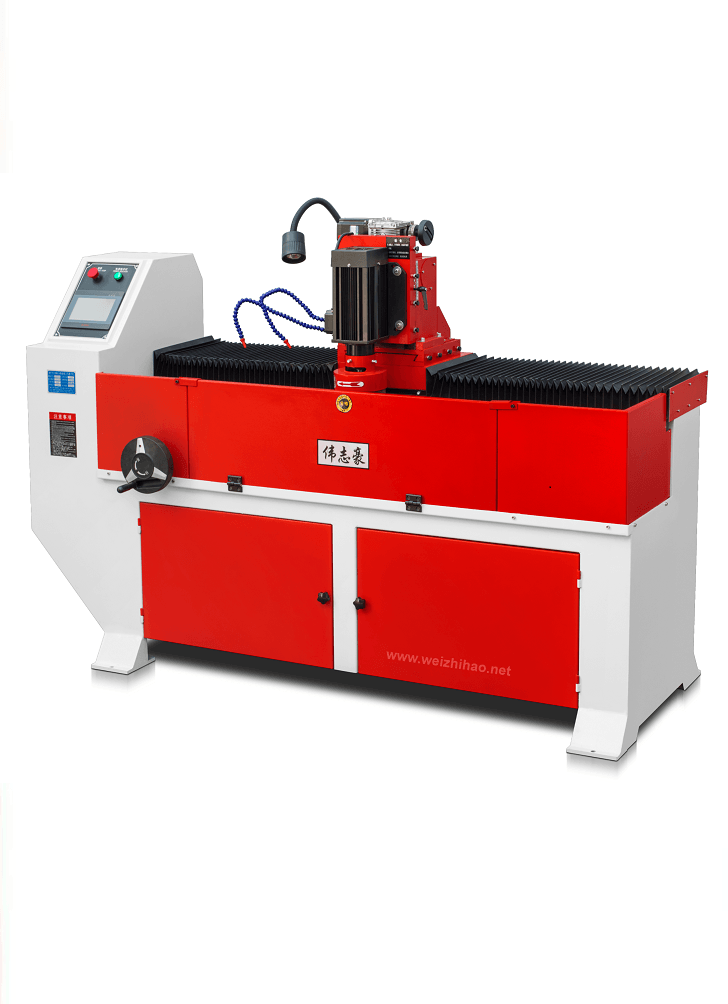
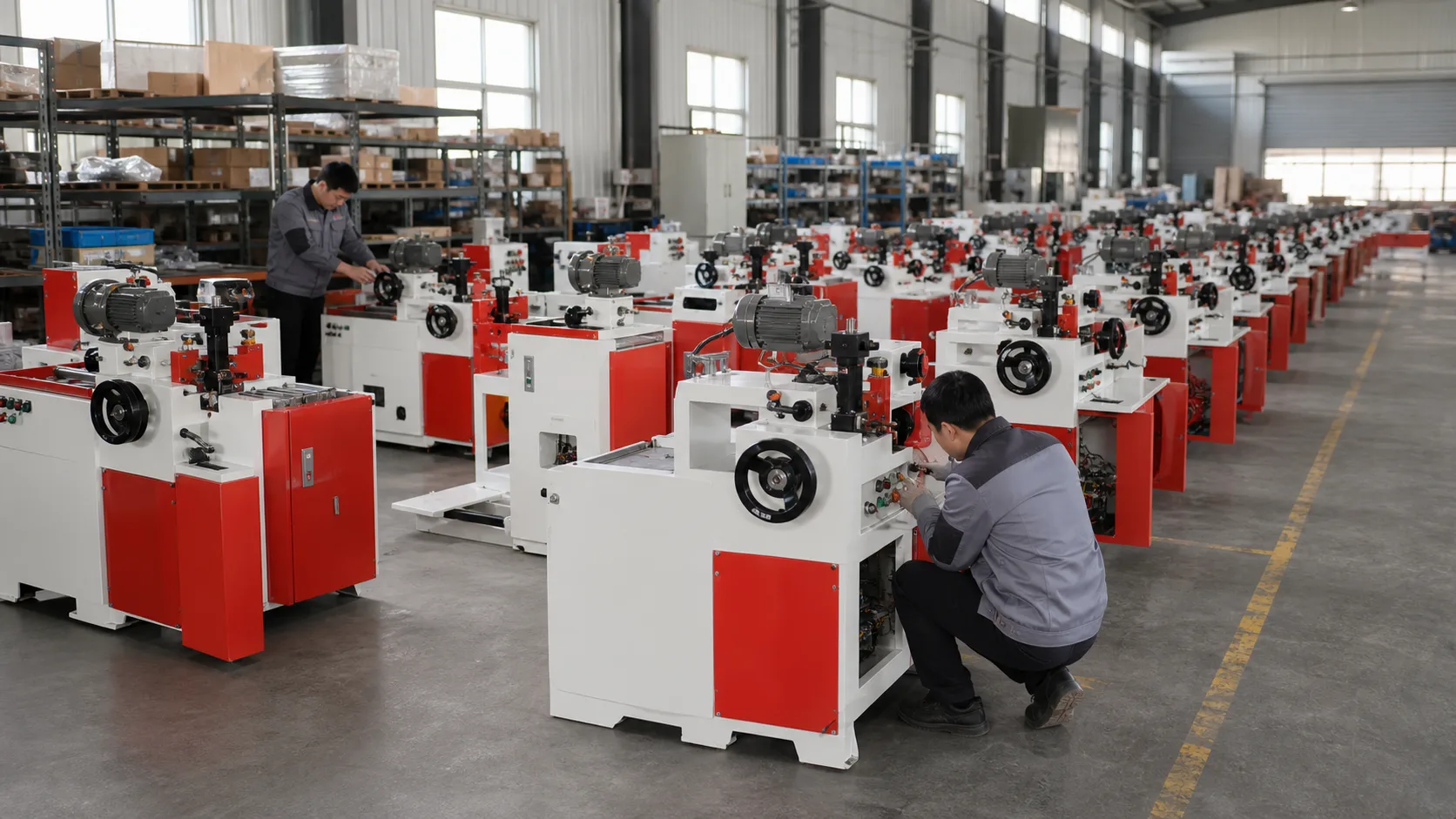
CNC linear knife grinding machine for long straight blades.Production workshop view for industrial sharpening machine manufacturing.
Choose the platform by verified blade length
Start with the longest blade that must be clamped and ground, then confirm the blade width, thickness, bevel, material, daily workload, and available floor space. The current WEIZHIHAO product records separate the MF2510CNC and MF2515CNC platform for straight knives up to 1,000 mm and 1,500 mm from the heavier MF2518, MF2520, MF2525, and MF2535 platform for longer knives. Do not select only by a model number: send the blade drawing or a measured sample so the factory can confirm usable travel, clamping, wheel clearance, and the final machine configuration.
Model
Published grinding length
Practical selection use
MF2510CNC
Up to 1,000 mm
Repeated planer knives and industrial straight blades within the compact platform range
MF2515CNC
Up to 1,500 mm
Longer woodworking, veneer, paper, and general industrial straight knives
MF2518
1,800 mm class
Long straight knives that exceed the MF2515CNC range
MF2520
2,000 mm class
Paper, veneer, woodworking, and industrial blades near 2,000 mm
MF2525
2,500 mm class
Heavy long-blade work requiring the extended platform
MF2535
3,500 mm class
Ultra-long straight knives at the upper end of the published series
Match the control and clamping workflow
The MF2510CNC and MF2515CNC product record describes electromagnetic clamping, integrated cooling, adjustable grinding angle, touch-screen operation, and separate fine and coarse grinding modes. The heavy MF2518 to MF2535 record describes an electromagnetic chuck, gantry-style structure, gear-rack travel, a water-cooled grinding head, speed control, and automatic down-feed. These are different operating platforms, so the quotation should identify the exact control interface and included functions instead of treating every model as mechanically identical.
Record the blade dimensions and bevel before setup; do not rely on a photo alone for length selection.
Clean the blade and clamping surface before electromagnetic clamping so debris does not create a false seating point.
Confirm the wheel specification, coolant path, travel limits, and grinding direction before the first powered pass.
Set the grinding mode, feed, and number of passes for the sample blade rather than copying settings from a different material.
Save the final accepted setup in the buyer's own process sheet, even when the selected control supports repeat operation.
Check blade and factory fit before quotation
A suitable CNC linear knife grinder must fit the real blade and the receiving factory. Buyers should compare the whole operating envelope, not only nominal length. A longer machine may increase floor, lifting, power, coolant, and operator-access requirements without adding value for a shorter blade range.
Longest and shortest blade length, width, thickness, material, bevel angle, and current edge condition
Flat seating area available for the electromagnetic chuck and any special fixture requirement
Grinding wheel type, wheel availability, coolant method, and routine wheel-dressing plan
Expected blades per shift and whether batches repeat or change frequently
Required voltage, phase, frequency, and any local electrical standard that must be confirmed
Door, container, forklift, crane, foundation, floor-load, and service-access constraints
Operator language, training needs, maintenance responsibility, and spare consumables required at startup
Factory acceptance sequence
Agree on the sample blade and acceptance record before production is completed. The check should prove that the quoted machine configuration can clamp, travel, cool, grind, and repeat on the buyer's blade. It should not introduce a tolerance that was never agreed in the quotation.
Identify the test blade: record length, width, thickness, material, bevel, starting condition, and the buyer's intended application.
Verify the supplied machine: compare model, voltage, control, chuck, coolant, wheel, accessories, and nameplate against the confirmed quotation.
Run setup checks: inspect blade seating, clamping, full travel, wheel clearance, coolant flow, guards, and emergency controls before grinding.
Complete a sample cycle: record the setup values and film the clamping, travel, grinding, coolant, and unloading stages in one traceable test.
Inspect the result along the full blade: look for an even edge, consistent bevel, burrs, burn marks, local overheating, and visible variation from end to end.
Repeat the critical pass or a second comparable blade when batch consistency is the purchasing reason, then retain the accepted video and settings with the shipment record.
Installation and workshop readiness
Ask for the final layout, machine dimensions, weight, electrical requirement, coolant arrangement, lifting points, and foundation guidance before shipment. Check that the receiving route can handle the packed machine and that the installation area leaves room for loading the longest blade, operating the control, cleaning the chuck, dressing the wheel, and servicing the coolant system. Confirm unloading equipment, local electrician support, coolant supply and disposal, grounding, lighting, and an operator who can join remote or on-site commissioning.
Reserve clear blade-loading space on both ends where the selected machine and blade require it.
Confirm floor and foundation requirements from the final supplier drawing, especially for the heavy 1,800 mm to 3,500 mm series.
Verify site voltage, phase, frequency, grounding, and cable capacity before the machine arrives.
Prepare clean coolant, drainage or collection, routine cleaning tools, and a safe wheel-storage area.
Plan forklift or crane access for unloading and positioning; do not assume workshop doors match the packing dimensions.
RFQ checklist
A complete inquiry lets the factory recommend a platform and define an acceptance test without guessing. Send the following information in one message and mark any item that still needs confirmation.
Blade photos plus a dimensioned drawing or measured length, width, and thickness
Blade material, bevel angle, cutting application, and current sharpening problem
Longest and shortest blade plus the expected blade range over the next two years
Daily or weekly quantity and whether the same blade type repeats in batches
Required finish or straightness criteria stated by the buyer, without inventing a tolerance
Factory voltage, phase, frequency, destination country, and destination port
Available floor area, foundation limits, unloading route, and lifting equipment
Preferred model or automation level and the reason for that preference
Requested sample-blade test, continuous factory video, inspection points, and report format
Required accessories, spare wheels, consumables, training, manuals, and commissioning support
Use product and factory evidence correctly
The machine image above identifies the MF2510CNC and MF2515CNC product family, while the workshop image provides manufacturing context. Use the linked product pages for the current published model details, then ask WEIZHIHAO to confirm the exact configuration in writing. For a remote evaluation, request a continuous test video that shows the machine nameplate, your sample blade, clamping, the complete grinding cycle, the finished edge, and the measurement or inspection method. Public factory videos are useful for screening, but the buyer-specific acceptance record should control the final purchase decision.
Use these practical guide pages to match blade type, factory workload, automation level, fixtures, and quotation details before choosing a sharpening machine.