
Knife Grinding Machine Purchase Orders: Clear Included and Excluded Items
Create a knife grinding machine purchase order with clear included and excluded items, acceptance checks, services, spares, and change control.

Knife Grinding Machine Purchase Orders with Clear Included and Excluded Items
Quick Answer: A knife grinding machine purchase order must state exactly what is included and excluded. Lock the verified base-machine configuration, then separately approve application-specific tooling, site work, and services. Do not treat an item as supplied unless it appears in the PO or an approved change order.
Make scope boundaries part of the PO
A purchase order is more than price confirmation. It should lock the configuration that will grind the buyer’s knives and name who supplies the surrounding equipment and work. This stops a low factory quote from becoming an incomplete installation after shipment.
Use separate columns for included supply, optional supply, and buyer-supplied work. Pakistan Security Printing Corporation (2025) listed machine supply and commissioning/training as separate procurement line items, a useful approach for comparing offers without mixing equipment and service.
Approve knife data and acceptance criteria first
Attach the latest knife drawing and state knife type, blade length, knife width, thickness, material, bevel, and clamping land. Specify the intended batch method and required straightness tolerance or other agreed inspection result. Workholding cannot be confirmed responsibly from a general description alone.
Define the handover test before issuing the PO: name the sample knife or agreed geometry, measurement method, witness, and required record. Buyers comparing a straight knife grinder category should apply the same drawing-and-test discipline to every configuration.
List the verified base-machine package
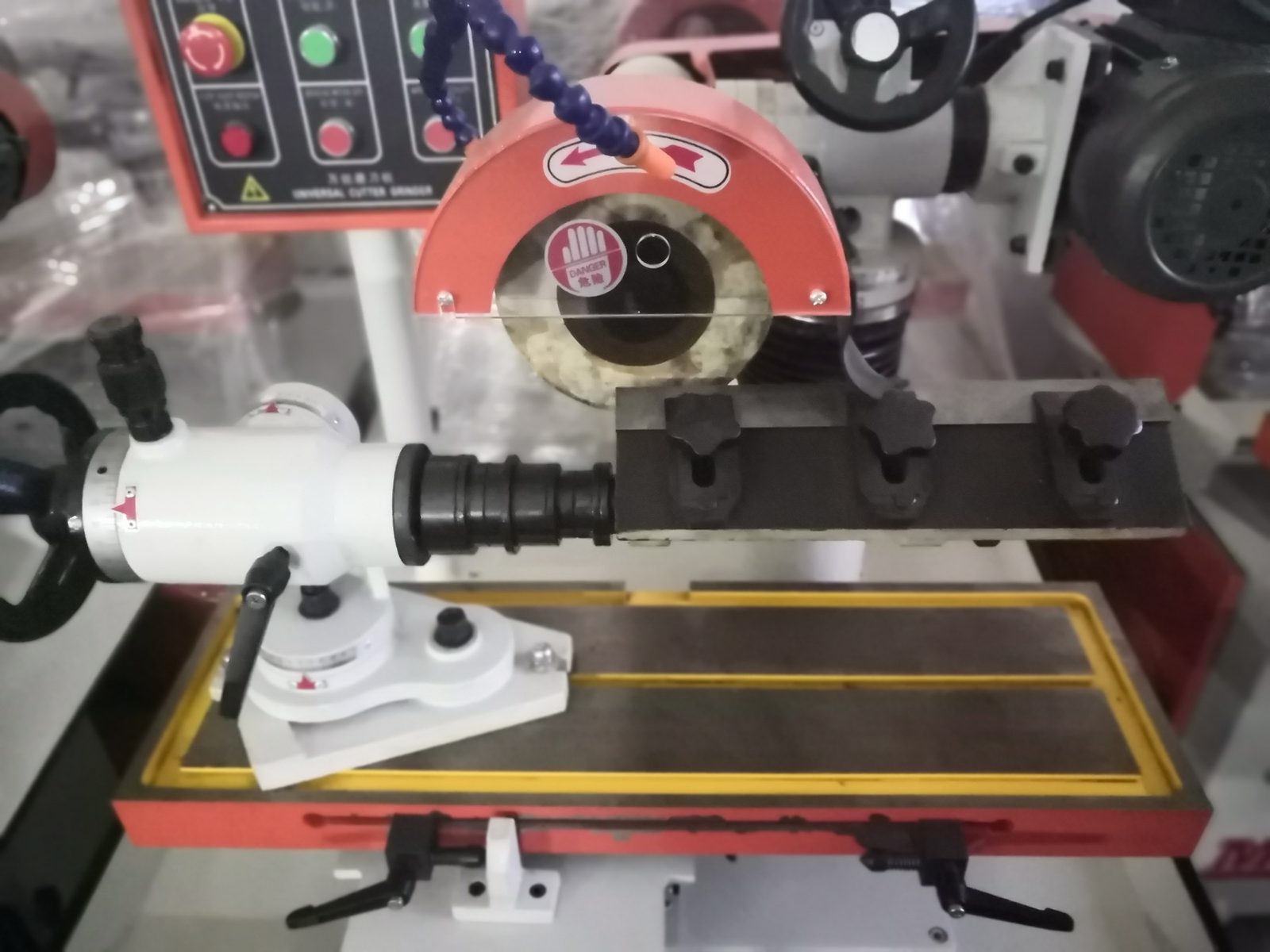
Identify the machine model, control system, standard workholding, guards, installed grinding wheel, coolant arrangement, manuals, and export packing line by line. Do not write “standard accessories” without a schedule, since standard content differs by supplier and configuration.
MVM S.r.l. (2026) identifies a mini-PLC as standard on its MX 150 while listing several other items upon request. EYAN Machine (2026) also separates standard accessories from optional wheels and balancing equipment. Ask Weizhihao, a manufacturer of relevant sharpening and grinding equipment, to tie its offered scope to the quotation revision and PO; review this heavy-duty CNC linear knife grinding machine when assessing a suitable configuration.
Show exclusions and options without ambiguity
Custom clamps, magnetic chucks, special fixtures, extra grinding wheels, filtration, mist control, automation, site electrical connection, unloading, and consumables must not sit in an unstated middle ground. Mark each as included, optional with a quoted price, buyer-supplied, or not applicable.
Colonial Saw (2026) describes optional external coolant tank and pump, sensor stops, jigs, and resting blocks for an MVM ZX listing. That example does not define another machine’s package; it shows why coolant and tooling boundaries require written confirmation. For other blade applications, compare the relevant blade grinding machine range before assuming one fixture suits every blade.
Require evidence for every scope boundary
| PO item | Scope status | Required evidence |
|---|---|---|
| Base machine and capacity | Included | Quoted model and approved specification |
| Clamps, chuck, and fixtures | Included or optional | Knife drawing and fixture description |
| Wheel and coolant package | Included or optional | Wheel description and coolant arrangement |
| Site power, unloading, installation | Buyer or supplier scope | Named responsible party and task list |
| Training and acceptance test | Included or separately priced | Agenda, test record, and sign-off method |
Attach commercial and handover controls
Attach the quotation revision, drawings, packing-list requirement, shipment terms, warranty start point, spare-parts list, and change-control process. State whether installation and training are supplier services, buyer responsibilities, or separately priced options. Changes to voltage, knife geometry, fixture design, or the acceptance method need written approval before production.
Review the wider Weizhihao product range when several blade families are in scope, and use the buyer FAQ to prepare unresolved technical questions.
FAQ: confirm PO scope before release
FAQ: What is normally included with a knife grinding machine?
Only the quotation and PO define “normally.” Require a line-item list for the machine, standard workholding, wheel, coolant arrangement, guards, documents, and packing.
FAQ: Are magnetic chucks, special clamps, and grinding wheels included?
Do not assume so. Confirm the exact chuck or clamp, wheel type, quantity, and any custom fixture against the approved knife drawing.
FAQ: Who supplies coolant filtration, electrical connection, installation, and training?
Name the responsible party for each task. If supplied by the seller, state the service scope and evidence of completion; if buyer-supplied, state site-readiness requirements.
FAQ: How should acceptance testing and warranty appear in the PO?
Define the knife sample, test method, acceptance record, witness arrangement, warranty start event, and process for reporting issues.
Next step: Send your knife drawings, application details, site responsibilities, and desired acceptance record to request a factory quote from Weizhihao. Ask for an included/excluded schedule that can be attached directly to your purchase order.