
Planer Knife Grinder Factory Layout Questions For Poland Wood Door Workshops
Planer knife grinder factory layout questions for Poland wood door workshops. Learn space, workflow, and safety tips for efficient straight knife grinding.
Planer Knife Grinder Factory Layout Questions For Poland Wood Door Workshops
When integrating a planer knife grinder into a wood door production line in Poland, factory layout is critical for workflow efficiency, operator safety, and machine longevity. This article addresses common layout questions for workshops producing interior and exterior doors, helping buyers plan their grinding area before purchasing a straight knife grinder.
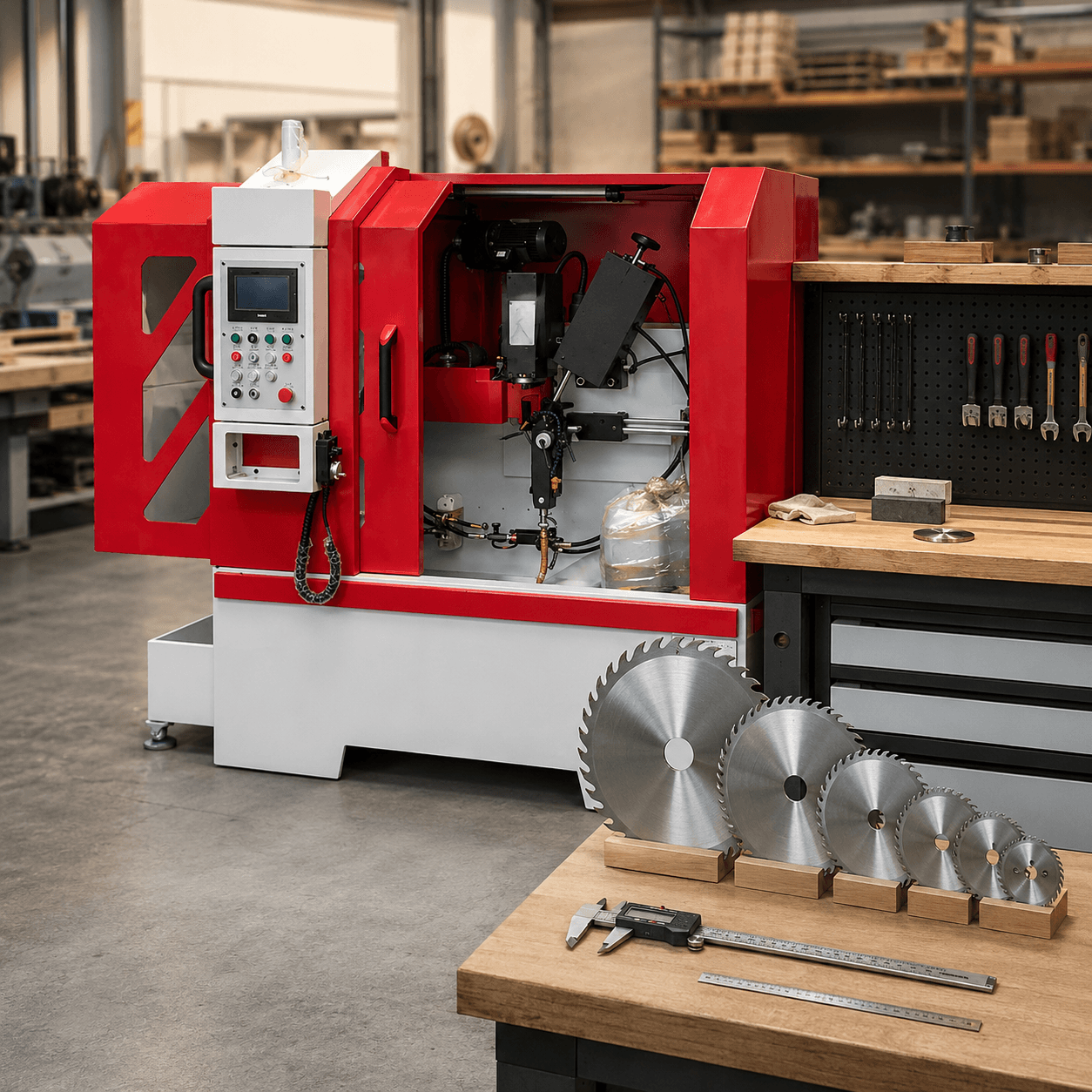
Key Layout Considerations for Planer Knife Grinders
Polish wood door workshops often have limited floor space. A well-planned layout ensures smooth material flow and minimizes downtime. Below are the essential factors to evaluate.
1. Machine Footprint and Clearance
Measure the grinder’s dimensions plus clearance for loading/unloading long planer knives. Allow at least 1 meter on each side for maintenance access. For example, a blade grinding machine may require 3m x 2m including operator space.
2. Workflow Integration
Position the grinder near the knife storage and assembly area. Avoid crossing main walkways. Consider a U-shaped layout: dirty knives enter from one side, sharpened knives exit to the opposite side. This reduces handling time.
3. Electrical and Ventilation Requirements
Planer knife grinders need stable 3-phase power and dust extraction. In Poland, workshops must comply with PN-EN standards. Install the machine near an electrical panel to reduce cable length. Use local exhaust ventilation to capture grinding dust.
4. Lighting and Operator Comfort
Good lighting (500 lux minimum) reduces errors. Place the grinder away from direct sunlight to avoid glare on the grinding wheel. Provide anti-fatigue mats for operators who stand for long periods.
Common Layout Mistakes to Avoid
- Placing the grinder in a corner – restricts access for maintenance.
- Insufficient space for grinding wheel dressing – operators need room to dress wheels safely.
- Ignoring future expansion – leave space for a second machine if production grows.
FAQ: Planer Knife Grinder Factory Layout
FAQ: What is the minimum floor space for a planer knife grinder in a wood door workshop?
For a typical manual or semi-automatic planer knife grinder, allocate at least 4m x 3m. This includes machine footprint, operator area, and space for knife handling. Larger automatic models may require 5m x 4m.
FAQ: Should I place the grinder near the planer or in a separate sharpening room?
It depends on workflow. If knives are changed frequently, locate the grinder close to the planer to minimize transport. For high-volume shops, a separate sharpening room reduces noise and dust exposure.
FAQ: What electrical specifications are needed for a planer knife grinder in Poland?
Most industrial grinders require 400V, 3-phase, 50Hz power. Check the motor power (typically 2-5 kW) and ensure the circuit breaker rating matches. Consult a licensed electrician for compliance with Polish electrical codes.
FAQ: How can I improve workflow around the grinder?
Use a dedicated cart for knife transport. Mark floor zones for incoming and outgoing knives. Install a shadow board for tools and dressing accessories. Train operators on standardized procedures to reduce idle time.
Next Steps for Polish Wood Door Workshops
Before finalizing your layout, review the product range of planer knife grinders and request a quote with detailed dimensions. For further assistance, visit our buyer FAQ or contact our sales team for layout recommendations tailored to your workshop.
Weizhihao Machinery manufactures reliable straight knife grinders designed for wood door production. Our team can provide CAD drawings and installation support to ensure your layout meets operational goals.