
Saw Blade Sharpener Acceptance Test Questions For Indonesia Plywood Factories
Essential saw blade sharpener acceptance test questions for Indonesia plywood factories. Ensure accuracy, TCT fit, and ROI before purchase.
Saw Blade Sharpener Acceptance Test Questions For Indonesia Plywood Factories
When investing in a saw blade sharpener for your Indonesia plywood factory, a structured acceptance test is critical to ensure the machine meets your production demands. Plywood manufacturing involves high-volume cutting of veneers and panels, requiring consistent tooth geometry and minimal downtime. This article outlines key acceptance test questions to evaluate a saw blade sharpener before purchase, covering capacity, accuracy, TCT compatibility, and after-sales support.
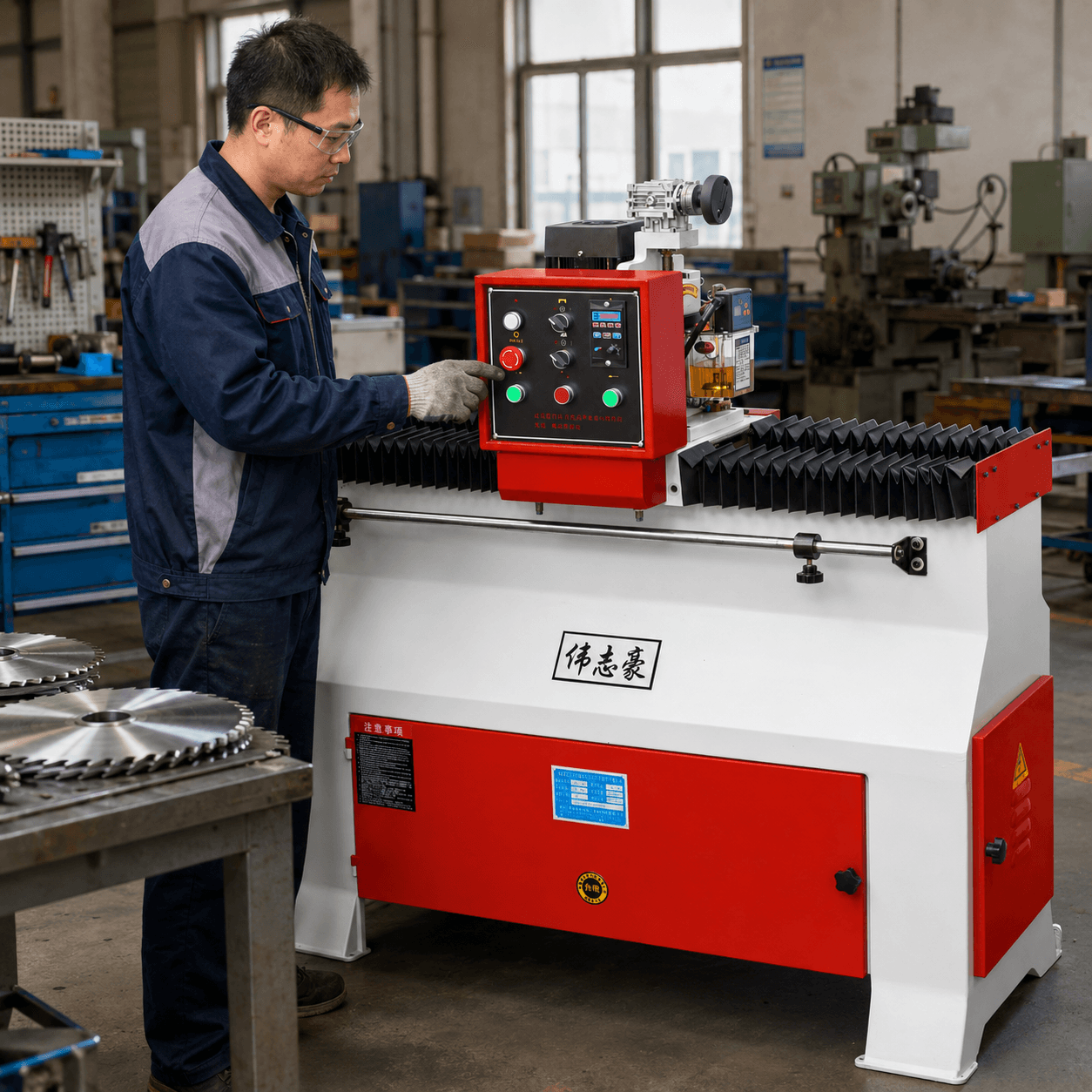
Why Acceptance Testing Matters for Plywood Factories
Indonesia plywood factories often process large-diameter saw blades (up to 600 mm or more) for panel sizing and edge trimming. A poorly performing sharpener can lead to uneven cuts, increased waste, and frequent blade changes. An acceptance test verifies that the machine can handle your blade range, maintain tolerances, and operate reliably under local conditions. Weizhihao Machinery, a manufacturer of industrial sharpening equipment, recommends these checks for buyers evaluating saw blade grinders.
Key Acceptance Test Questions
1. Blade Diameter and Tooth Profile Capacity
Does the saw blade sharpener support the blade diameters and tooth profiles used in your plywood line? For example, TCT (tungsten carbide tipped) blades require specific grinding wheel angles and feed mechanisms. Ask the supplier to demonstrate sharpening a sample blade from your inventory. Check if the machine can handle both top and face grinding for common tooth profiles like ATB (Alternate Top Bevel) or flat grind. Weizhihao’s circular saw blade grinding machines offer adjustable tooth pitch and angle settings for various TCT blades.
2. Grinding Accuracy and Repeatability
Measure the runout and tooth height variation after sharpening. Use a dial indicator to check blade runout on the arbor. For plywood factories, a tolerance of ±0.02 mm on tooth tip height is typical. Ask for a test run of 10 blades and record the consistency. Manual vs. automatic machines differ in repeatability; automatic models like the MF158C provide CNC-controlled indexing for higher precision. Review the product range for options with digital readouts or servo motors.
3. Grinding Wheel Dressing and Consumables
How often does the grinding wheel need dressing, and what is the cost of replacement wheels? For TCT blades, diamond wheels are essential. Ask the supplier to demonstrate the dressing process and verify that the machine includes a built-in dresser. Also, check the availability of spare parts and consumables in Indonesia. Weizhihao provides buyer FAQ on wheel selection and dressing intervals.
4. Operator Training and After-Sales Support
Does the supplier offer on-site training for your operators? Plywood factories often have multiple shifts, so training should cover setup, operation, and basic troubleshooting. Ask about response time for technical support and spare parts delivery to Indonesia. A reliable partner like Weizhihao can arrange remote video support and provide manuals in Bahasa Indonesia. For a detailed quote, visit the contact page.
FAQ
FAQ: What blade diameter range should a saw blade sharpener cover for plywood factories?
Most plywood factories use blades from 200 mm to 600 mm. Ensure the machine’s arbor and clamping system accommodate this range. Some models can handle up to 800 mm with optional extensions.
FAQ: How do I test TCT blade sharpening accuracy?
After sharpening, measure tooth tip runout with a dial indicator. Acceptable runout is under 0.03 mm. Also, check the tooth angle using a protractor gauge to match the original specifications.
FAQ: What is the typical ROI for a saw blade sharpener in a plywood factory?
ROI depends on blade volume and outsourcing costs. If you sharpen 50 blades per week at $5 each externally, a $10,000 machine pays back in under a year, including consumables and labor.
FAQ: Can a manual saw blade sharpener achieve the same accuracy as an automatic one?
Manual sharpeners rely on operator skill, while automatic machines use CNC indexing for consistent results. For high-volume plywood lines, automatic models are recommended to maintain repeatability.
Next Steps for Buyers
Prepare a checklist of your blade types, desired throughput, and budget. Contact Weizhihao Machinery to arrange a live test or request a video demonstration. A thorough acceptance test ensures your saw blade sharpener delivers long-term value for your Indonesia plywood factory.
Request a quote for a saw blade sharpener tailored to your plywood production.